
September 16, 2026/
Explore Port Hueneme investment properties in 2026, from multifamily and NNN opportunities to owner-financed and commercial real estate near the...


Straight talk on what the 2026 loan limits mean in the real world—how far the conforming cap goes in Ventura vs. LA, where “jumbo” actually begins, and how down payment, MI/PMI, HOA, and taxes change your options.
2026 conforming loan limits Ventura Los Angeles is the search that tells me you want the numbers, the rules, and the real-world “what does this mean for me?” answer—fast. Here are the two caps that matter for most buyers in 2026: $1,035,000 for Ventura County and $1,249,125 for Los Angeles County (one-unit properties). (FHFA sets these limits for loans Fannie Mae and Freddie Mac can acquire.)
First, here’s the headline: in 2026 the one-unit conforming loan caps are $1,035,000 in Ventura County and $1,249,125 in Los Angeles County. These caps determine whether you’re in high-balance conforming loan limits 2026 territory or you’ve crossed into the jumbo mortgage threshold 2026 for that county.
However, what this means for you depends on your down payment and your full monthly housing cost (P&I + taxes + insurance + HOA + MI/PMI). Specifically, if you’re shopping near the cap, two buyers can target the same home price and end up with totally different approvals and payments because one has higher HOA dues or needs MI/PMI.
Additionally, I recommend you do two quick checks before you fall in love with a house:
Meanwhile, if you want to browse homes with the right filters (price band, HOA, school areas), use my home search hub for Ventura and Los Angeles listings and then I’ll help you align the financing structure to the conforming loan caps Ventura County vs conforming loan caps Los Angeles County decision you’re trying to make.
First, “conforming” means the loan size is within the annual limits set by the Federal Housing Finance Agency (FHFA) for loans that Fannie Mae and Freddie Mac can acquire. Additionally, FHFA adjusts these limits under the Housing and Economic Recovery Act (HERA) based on changes in home prices; high-cost areas can have higher limits, up to a ceiling. In 2026, FHFA states the baseline one-unit limit is $832,750 and the maximum ceiling one-unit limit is $1,249,125.
According to the Federal Housing Finance Agency’s official announcement, these 2026 conforming limits apply to loans the Enterprises can acquire under the HERA framework: FHFA Announces Conforming Loan Limit Values for 2026.
First, FHFA doesn’t pick county limits randomly—it applies a formula under HERA that ties “high-cost” limits to local home values. Specifically, FHFA compares the baseline limit to 115% of the local median home value; if that number exceeds the baseline, the county can receive a higher limit—up to the ceiling. Therefore, Los Angeles County reaches the maximum ceiling in 2026 at $1,249,125, while Ventura County lands lower at $1,035,000.
However, the buyer implication is straightforward: the Ventura vs. Los Angeles 2026 conforming loan limits difference changes your “stay conforming” purchase-price breakpoint at the same down payment. Additionally, it affects how quickly you hit the jumbo mortgage threshold 2026 and whether you should plan for jumbo reserve requirements or structure the deal to remain within high-balance conforming loan limits 2026. In real life, this is why I run side-by-side scenarios using the conforming loan caps Ventura County and conforming loan caps Los Angeles County before you write offers.
Meanwhile, local context matters. Even in the same month, the “right” financing choice in Ventura County can look different than Los Angeles or the San Fernando Valley. First, get the market-side read here: Ventura County's January 2026 real estate market trends and San Fernando Valley January 2026 price and inventory analysis. Additionally, if you’re making a 6–12 month decision, pair that with Southern California's 2026 housing market forecast and rate predictions.
First, these are the official 2026 one-unit conforming loan limits (the most common scenario for a single-family home or condo). Therefore, anything above the one-unit limit in that county is, by definition, jumbo for that property type. In contrast, staying at or below the limit keeps you within the conforming lane—often including high-balance conforming loan limits 2026 when your county cap is above baseline.
| County | 2026 One-Unit Conforming Limit | “Jumbo” Starts Above | Example Jumbo Triggers (Illustrative) |
|---|---|---|---|
| Ventura County | $1,035,000 | $1,035,000 loan amount |
Triggers shown are purchase-price examples that exceed the loan cap given the down payment.
|
| Los Angeles County | $1,249,125 | $1,249,125 loan amount |
Triggers shown are purchase-price examples that exceed the loan cap given the down payment.
|
First, the practical takeaway is simple: the loan limit is a loan-amount cap, not a home-price cap. Therefore, your purchase price ceiling depends on your down payment, and your monthly payment depends on the “full housing” number: principal + interest (P&I) plus taxes, insurance, HOA dues, and (if applicable) MI/PMI.
2026 conforming loan limits in Ventura and Los Angeles matter because they set the maximum loan amount you can keep in the conforming bucket—then your down payment determines the highest purchase price you can target without going jumbo. Specifically, in Ventura County, the 2026 conforming loan limit of $1,035,000 means your top purchase price stays near $1.09M at 5% down, about $1.15M at 10% down, and about $1.29M at 20% down (illustrative). For instance, if you’re close to that line, MI/PMI, HOA, taxes, and points can swing approval and payment comfort.
Likewise, in Los Angeles County, the 2026 conforming loan limit of $1,249,125 means your conforming price ceiling can stretch higher at the same down payment—often delaying the jumbo mortgage threshold 2026 decision. In practice, the table below translates those caps into 2026 mortgage buying power breakpoints you can use while touring homes.
| Down Payment (Illustrative) | Ventura: Max Purchase Price at Conforming Cap | Los Angeles: Max Purchase Price at Conforming Cap | Key Payment Drivers | MI/PMI Notes (General) |
|---|---|---|---|---|
| 5% down | $1,089,500 | $1,314,900 | First, higher loan amount = higher P&I; additionally, taxes + insurance scale with price; meanwhile, HOA is additive. If you’re close to the line, small changes (rate, HOA, insurance) can impact approval. | Generally, MI/PMI is required above ~80% LTV on conventional loans; cost varies by credit, LTV, and program. Therefore, treat MI as a “payment lever,” not a surprise line item. |
| 10% down | $1,150,000 | $1,387,900 | Second, this is often a sweet spot for staying conforming while limiting MI cost and improving DTI. Additionally, closing costs and reserves still matter, especially if you’re also paying HOA dues. | In contrast to 95% LTV scenarios, MI/PMI may price better at 90% LTV depending on your profile. Consequently, compare total payment, not just rate. |
| 20% down | $1,293,750 | $1,561,400 | Third, you may eliminate MI/PMI and improve DTI; however, cash-to-close is higher. In practice, comparing “more down” vs “points” is worth a clean spreadsheet. | Generally, conventional MI/PMI is not required at 80% LTV or lower. Therefore, this option often improves monthly payment stability. |
First, if you’re buying and also selling (or you’re deciding whether to sell first), a quick valuation often clarifies your down-payment and jumbo-vs-conforming options in one move.
Get My Free Home Valuation Explore Buyer ResourcesFirst, most buyers assume jumbo = worse; however, jumbo pricing can be competitive (or even better) depending on the lender, your credit profile, and your assets. Here are the most common reasons jumbo can “win” in 2026:
Major lenders often compete aggressively for jumbo business; for example, Wells Fargo explains how jumbo loans work when the loan amount exceeds FHFA limits: Wells Fargo jumbo mortgage overview.
First, some lenders price aggressively above conforming limits to win high-balance business, especially for strong credit and large asset profiles. Therefore, the only honest answer is: run both scenarios—conforming with MI/PMI vs jumbo with a larger down payment or reserves.
Second, if you’re at 10% down, the choice isn’t always “pay MI forever.” Instead, it can be: (a) slightly more down to reduce MI, (b) a different property with lower HOA, or (c) a conforming structure that keeps your monthly number stable. In practice, use this tool to calculate your 2026 monthly payment with conforming loan rates and compare apples-to-apples.
Third, jumbo often comes with reserve requirements (months of payments in liquid assets). However, the exact rules vary by lender and profile, so if you’re close, this is the question to ask early—before you fall in love with the house.
First, the best 2026 strategy is rarely “lowest rate at all costs.” Instead, it’s a trade-off between payment comfort, cash-to-close, and how long you expect to keep the loan. Here are the options buyers use most:
First, a temporary buydown reduces the borrower’s payment for a limited period (commonly the first one or two years), typically funded by seller credits or other eligible sources. However, this only works if you can afford the full payment when the buydown ends.
Second, points can reduce the interest rate for the life of the loan. Therefore, the break-even question is simple: “How many months until the monthly savings equals the points paid?” In contrast, if you expect to refinance or move soon, points often don’t pay off.
Third, a small improvement in credit profile can affect pricing and MI/PMI costs. Consequently, before you pay points, ask if there’s a faster win: paying down revolving balances, correcting an error, or reworking the down payment mix.
First, the official 2026 one-unit conforming loan limits are $1,035,000 in Ventura County and $1,249,125 in Los Angeles County. Therefore, the conforming loan caps Ventura County vs conforming loan caps Los Angeles County difference directly changes how high you can go before you hit jumbo. In practice, confirm your target price band with your down payment so the loan amount stays under the cap. Next, jump to the table and identify your breakpoint.
Second, a loan becomes jumbo when the loan amount exceeds the county cap—this is the jumbo mortgage threshold 2026 decision point. Specifically, Ventura goes jumbo above $1,035,000, and Los Angeles goes jumbo above $1,249,125 (one-unit). However, your purchase price can be higher if your down payment keeps the loan amount under the limit. As a result, run “conforming vs jumbo” scenarios before you write offers near the line.
First, there’s no universal winner in 2026—pricing depends on lender appetite, credit, assets, and how the loan is structured. However, conforming/high-balance options can be efficient because guidelines are standardized, while jumbo can be competitive for strong borrowers and larger down payments. Therefore, compare a conforming option (including MI/PMI if needed) versus jumbo with any reserve requirements. Next, use the buying-power table to see which structure fits your payment comfort.
Specifically, points usually lower your interest rate but increase cash-to-close, while MI/PMI increases your monthly payment when your LTV is high. Consequently, both affect your 2026 mortgage buying power: points can reduce the payment, and MI/PMI can allow less down—but at a monthly cost. In practice, compare your break-even timeline and your cash reserves. Next, model two scenarios and pick the one that stays comfortable.
Additionally, HOA dues and property taxes are typically counted in your total housing payment for DTI, so they can reduce what you qualify for even with a solid rate. For example, a $600 HOA can push a near-cap purchase from “works” to “tight” on paper. Therefore, estimate HOA, taxes, and insurance early. Next, run an affordability scenario that includes HOA so your search results match your approval.
Likewise, you can often switch from jumbo to conforming by increasing the down payment so the loan amount drops below the county cap. In contrast, adjusting down payment keeps the same property but changes the structure—sometimes enough to stay within high-balance conforming loan limits 2026. Therefore, compare more down versus points versus a different HOA/tax profile. Next, identify the smallest change needed to stay conforming.
First, if you’re using 2026 conforming loan limits Ventura Los Angeles to plan your purchase, keep the two key caps front and center: $1,035,000 in Ventura County and $1,249,125 in Los Angeles County (one-unit). Consequently, your down payment and full monthly housing cost determine whether you stay inside the conforming lane or cross the jumbo mortgage threshold 2026.
Meanwhile, if you’re deciding whether to sell first (or you need equity clarity for your down payment), start with a quick valuation and we’ll map the cleanest path—conforming vs jumbo, points vs cash-to-close, and what that means for your 2026 mortgage buying power.
First, I’ll help you map the cleanest path—stay conforming when it’s smart, go jumbo when it’s the better deal, and keep the full payment (including HOA/taxes) realistic. Additionally, if you’re selling too (or deciding whether to), start with a quick valuation and we’ll build from there.
Get My Free Home Valuation Buyer Resources HubExplore Port Hueneme investment properties in 2026, from multifamily and NNN opportunities to owner-financed and commercial real estate near the...
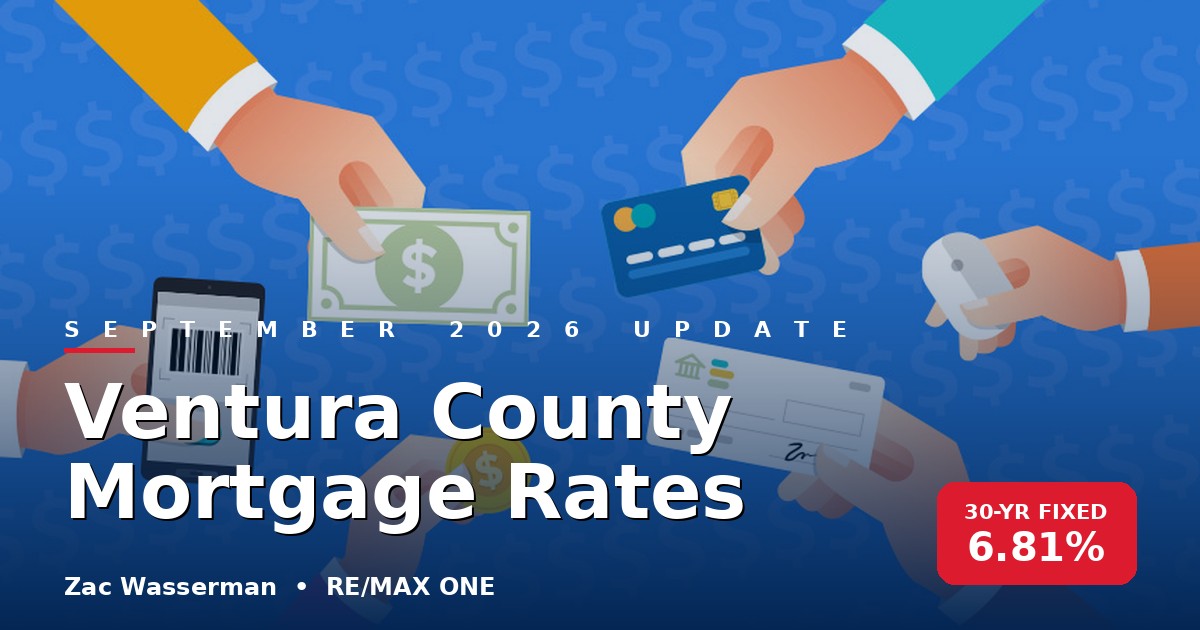
Ventura County Mortgage Rates: September 2026 Update September 2026 Mortgage Update Ventura County Mortgage Rates: September 2026 Update Rates have...

Can You Sell an ADU Separately in California? Your 2026 AB 1033 Guide for LA & Ventura County Sell an...
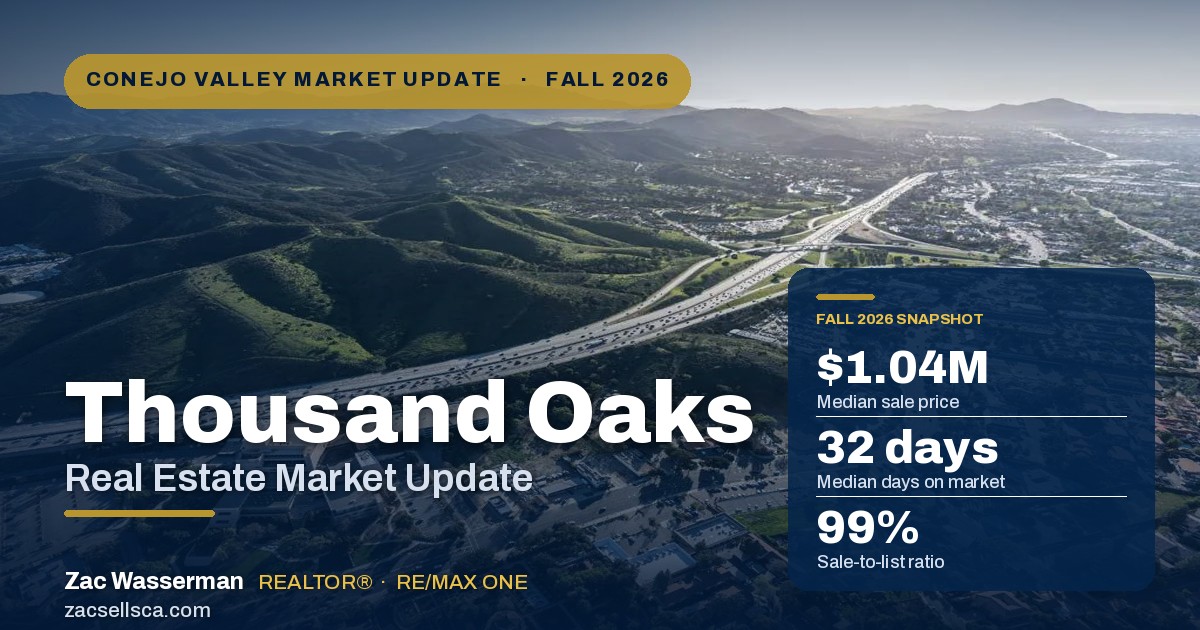
Conejo Valley Market Update · Fall 2026 Thousand Oaks Real Estate Market Update: Fall 2026 Prices remain firm, inventory is...
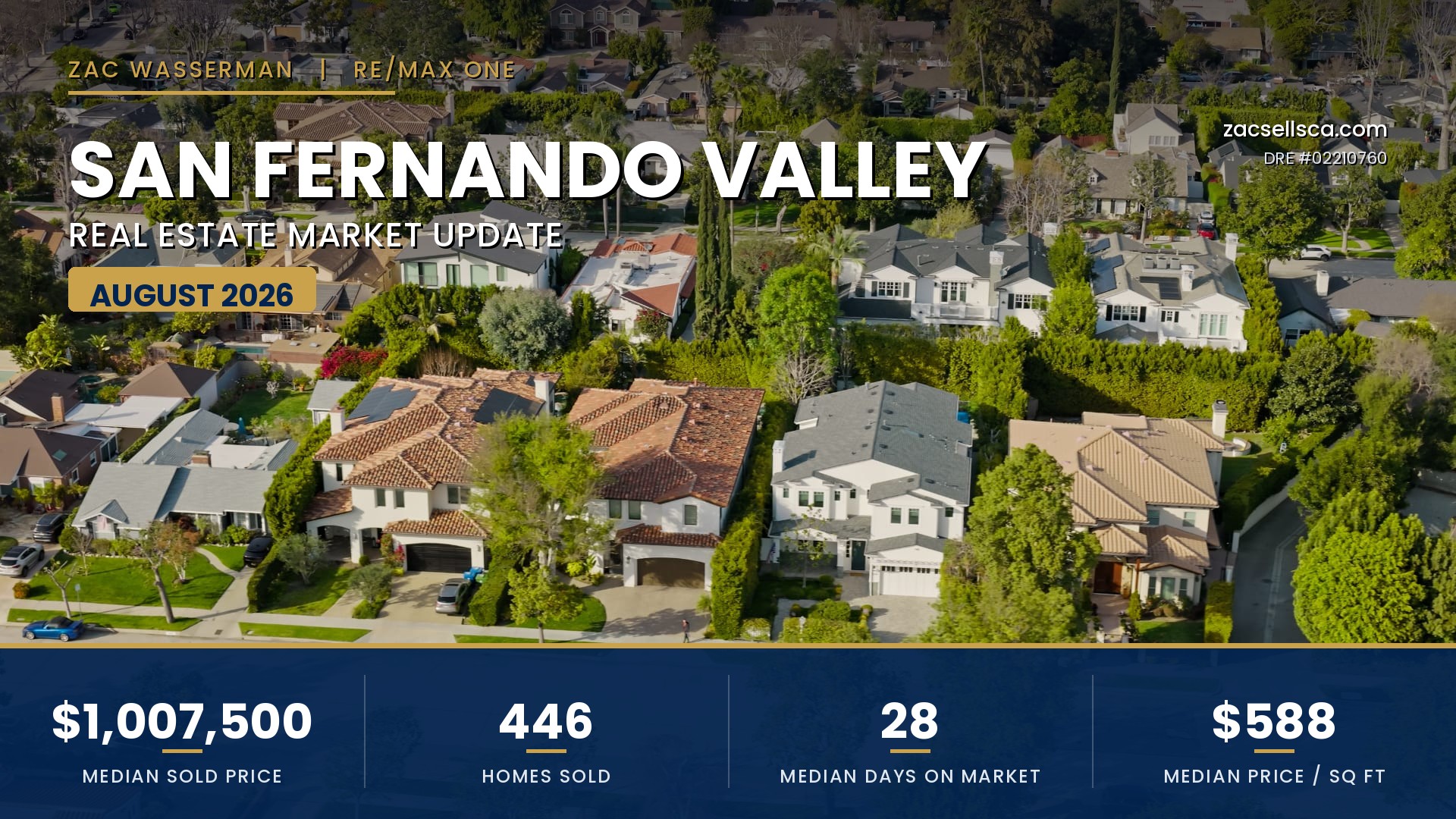
August 2026 • Local Market Report San Fernando Valley Housing Market Update: August 2026 Prices, Trends & City-by-City Data By...
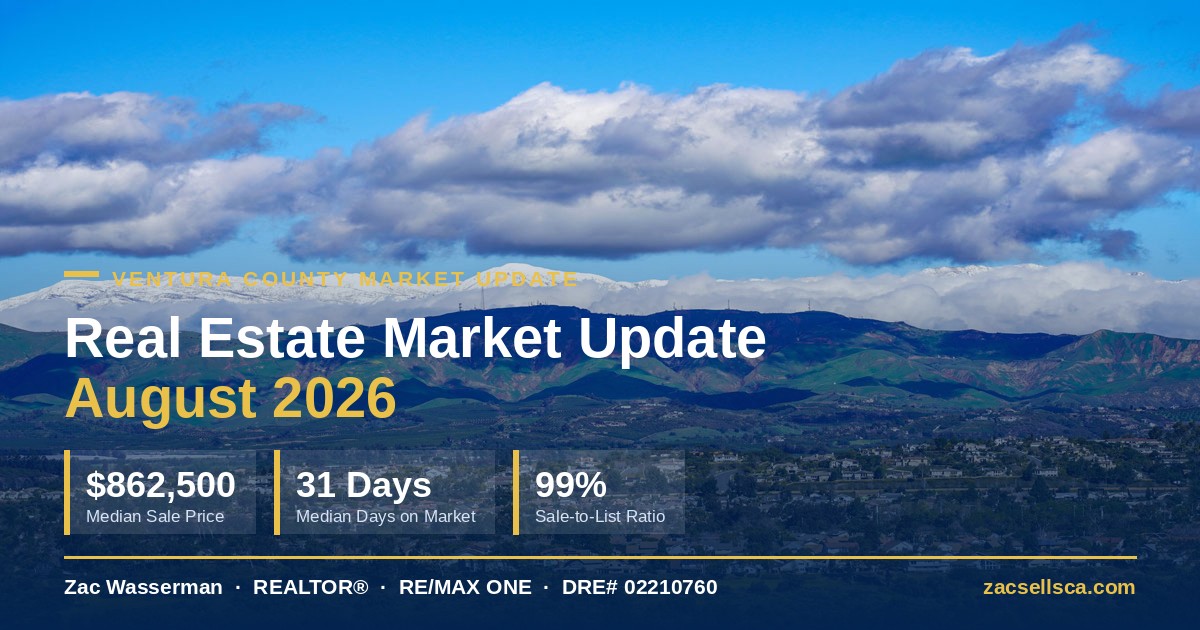
Ventura County Real Estate Market Update: August 2026 Ventura County Market Update — August 2026 Ventura County Real Estate Market...
Ventura County Real Estate Guide • 2026 Ventura County Foreclosures in 2026: How to Buy Smart or Sell Fast A...

California FAIR Plan Rate Increase 2026: What It Means California FAIR Plan Rate Increase 2026: What It Means for Ventura...

Explore the best neighborhoods in Thousand Oaks, CA for 2026 — from North Ranch luxury to family-friendly Dos Vientos. A...