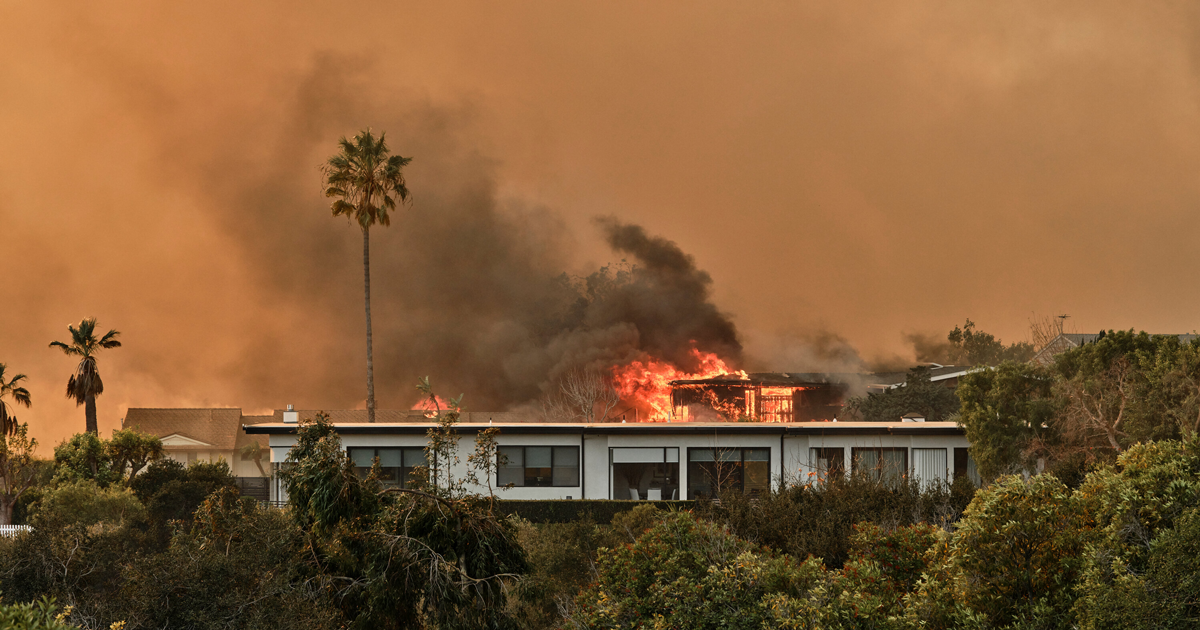
In 2025, Los Angeles wildfire insurance is one of the first questions serious buyers ask me — often before they even schedule showings: “Can I still get home insurance in LA?” and “What will wildfire coverage actually cost me?” The short answer is yes, coverage still exists — but the process, timelines, and pricing logic are different than they were even 2–3 years ago.
Actionable takeaway: treat insurance like a lender condition, not a post-offer task — especially in Malibu, Pacific Palisades, Topanga, Calabasas/Agoura hillsides, and canyon-adjacent neighborhoods.
Quick Answers: LA Wildfire Insurance (2025)
Yes — but many buyers now need a two-step solution (FAIR Plan + a wrap/DIC policy) in hillside, canyon, or brush-adjacent areas. The winning approach is to get address-specific quotes before you offer and confirm a viable backup path if a standard carrier declines.
Usually no. FAIR Plan commonly covers fire-related perils and limited additional items — most homeowners add a wrap/DIC policy to include liability and other standard protections. Think of FAIR as the “fire layer,” and the wrap as what makes coverage feel like a traditional homeowners policy.
In many cases, yes — as long as your total coverage amounts meet lender requirements (often tied to replacement cost and/or loan amount). The key is making sure your FAIR + wrap combination satisfies dwelling coverage and includes liability where required by the lender.
Premiums vary widely by exact address and structure details, but higher-risk hillside and WUI zones often price materially above flatter, lower-risk areas. Use the cost table below as a starting point, then get 3–5 address-specific quotes and confirm your backup path (FAIR + wrap) before you write an offer.
How does wildfire insurance affect Ventura County buyers & owners in 2025?
Even though this guide highlights Los Angeles, the same underwriting patterns show up in parts of Ventura County real estate — especially anywhere bordering open space, hillsides, canyons, or the wildland-urban interface (WUI). If you want a Ventura County market baseline, start here: Ventura County real estate market update & guides.
- Foothill / hillside pockets: parts of Thousand Oaks, Oak Park, Newbury Park, Moorpark hills, and open-space-adjacent streets can see tighter underwriting.
- Ojai & canyon-adjacent areas: higher likelihood of FAIR Plan pathways, higher premiums, and stricter defensible space expectations.
- Property-specific outcomes: two homes in the same ZIP can get different results depending on roof, vents, vegetation clearance, and access/egress.
Valley floor areas in Camarillo and Simi Valley tend to have broader insurance availability.
In my experience showing homes near open space in the Conejo Valley/Westlake-area corridor, the buyers who close smoothly are the ones who treat insurance like a pre-approval step — not a “week-of-closing” surprise.
Why is wildfire home insurance so hard in 2025?
The California insurance market didn’t flip overnight — it tightened after repeated catastrophic losses, rising rebuilding costs across the entire Southern California real estate market, and changing reinsurance pricing. In practical terms, buyers and owners felt the impact as: fewer carrier options, stricter underwriting, higher deductibles, and faster-moving carrier appetite changes.
- Not every carrier writes every ZIP: hillside/canyon/WUI zones can trigger automatic declines.
- Deductibles can be percentage-based: wildfire deductibles commonly show up as 2%–5% of dwelling coverage.
- Insurance can affect qualification: a higher annual premium can change the buyer’s true monthly payment and debt-to-income ratios.
Which Los Angeles areas are most impacted by wildfire risk?
In general, hillside and canyon communities and neighborhoods bordering large open-space preserves face the most scrutiny. Availability can be extremely granular — sometimes varying street-by-street.
Coastal communities often discussed in wildfire underwriting
- Malibu
- Pacific Palisades
- Topanga Canyon
Some buyers also explore neighboring Ventura County coastal options like Ventura for different risk profiles.
Foothill and canyon communities commonly flagged by buyers
- La Cañada Flintridge / Altadena
- Pasadena foothills
- Calabasas / Agoura Hills and other LA County hillside communities
- Woodland Hills / Tarzana (open-space-adjacent pockets)
If you’re shopping in these zones, build insurance checks into your showing workflow. Last month, I had a buyer narrow to two similar homes — and the insurance swing was big enough that one became a “no” once we ran real quotes.
What are your 3 main coverage options in LA (and who each option fits)?
Option 1: Standard admitted carriers
Traditional insurers regulated by the CA Department of Insurance. When available, this is usually the simplest structure (single policy).
- Best for: lower-risk areas, hardened homes, and buyers who complete the pre-approval process early.
- Watch for: stricter underwriting in hillsides/canyons/WUI.
Option 2: California FAIR Plan + wrap/DIC policy
FAIR Plan is commonly used when standard carriers won’t write the fire layer. Many owners then add a wrap/DIC policy for liability and additional perils. In practice, this is the most common “solution stack” I see for higher-risk zones.
Option 3: Surplus lines insurers
Non-admitted markets designed for harder-to-place risks. Often higher premiums, but sometimes a path for unique properties or specific underwriting profiles.
| Option | When it’s most common | Pros | Tradeoffs |
|---|---|---|---|
| Admitted carrier | Lower/moderate risk zones | Single policy; often best pricing | Can decline quickly by location/property features |
| FAIR + wrap | Hillside/canyon/WUI | Reliable path when standard markets refuse | Two policies; coverage coordination matters |
| Surplus lines | Hard-to-place or unique risks | Flexible underwriting | Often higher premiums; policy terms vary |
FAIR Plan vs. traditional vs. surplus: what does it cost (ballpark)?
Costs vary by address, claims history, rebuild cost, roof/vents, defensible space, and access. The ranges below are illustrative to help you model payments early — then you must confirm with real quotes.
| Coverage Type | Example: $800K Home | Example: $1.5M Home | What’s Covered |
|---|---|---|---|
| Traditional carrier (lower risk area) | $2,400–3,200/year | $4,200–5,800/year | Fire + liability + theft + water + more |
| Traditional carrier (higher risk area)* | $5,000–7,500/year | $8,500–12,000/year | Comprehensive (when available) |
| FAIR Plan + wrap | $6,200–8,500/year | $10,000–14,500/year | Fire via FAIR + other perils via wrap |
| Surplus lines | $7,500–10,000/year | $12,000–18,000/year | Comprehensive single policy (varies) |
*When available — some carriers restrict new policies in high-risk zones regardless of price.
What should buyers check before writing an offer? (Pre-offer insurance checklist)
- Get real quotes for the exact address: ask 3–5 brokers for preliminary pricing and availability.
- Confirm backup path: if a standard carrier declines, verify FAIR eligibility + identify wrap/DIC options.
- Check fire hazard severity zone: review CAL FIRE FHSZ maps for context (not the only underwriting factor).
- Ask for the seller’s current insurance snapshot: carrier, premium, renewal date, any notices (if available).
- Model your full payment: mortgage + taxes + HOA + insurance using conservative numbers. Use first-time buyer payment calculators to stress-test affordability.
- Audit “hardening” features: roof class, ember-resistant vents, windows, defensible space, enclosed eaves.
If you want an “address triage” workflow for showings, text me the address and I’ll tell you what I’m seeing in that type of micro-location and what questions to ask a broker.
Defensible space & documentation checklist (what insurers actually ask for)
Many buyers underestimate how much documentation can speed up underwriting. Even if a carrier doesn’t “discount” every improvement, documentation can be the difference between approval and a decline.
- Dated photos: Zone 0 (0–5 ft), Zone 1 (5–30 ft), Zone 2 (30–100 ft) from multiple angles. Professional property photography and documentation practices can speed underwriting.
- Roof proof: installation year, material, permit/receipt if available (Class A matters).
- Vent proof: ember-resistant vent specs/receipt + installed photos.
- Brush clearance receipts: invoices, before/after photos, and ongoing maintenance schedule.
- Access/egress notes: driveway width, turnaround, hydrant distance (if known).
What should you ask an insurance broker for LA wildfire coverage?
- “Which markets are you quoting this address in today?” (Not “in general.”)
- “If admitted declines, what’s the FAIR + wrap plan?”
- “What dwelling coverage amount are you using and why?” (replacement cost logic)
- “Is there a separate wildfire deductible?” and if yes, what percent?
- “Any required inspections or photos?” and what fails most often?
- “What hardening items change eligibility fastest?”
- “What’s the binding timeline?” (same-day vs multi-day underwriting)
- “Any restrictions on prior claims?” (CLUE report impacts)
Also consider which school districts align with your priorities, as some families prioritize schools first, then filter by insurance availability.
What’s next: 2026 insurance outlook (realistic expectations)
Expect insurance to remain a critical transaction variable in wildfire-exposed areas. Even if market rules evolve, underwriting will likely stay property-specific. The buyers who win in 2026 will be the ones who: (1) shop insurance early, (2) harden homes proactively. For broader market context, see our 2026 Southern California housing forecast.
Want a simple “insurance-first” home search plan?
If you’re deciding between two neighborhoods (or two specific streets), I can help you pressure-test insurance risk early so you don’t fall in love with a home that can’t be insured on reasonable terms.
Frequently Asked Questions
Last updated: December 17, 2025

About Zac Wasserman
Realtor® | CA DRE# 02210760 | RE/MAX ONE
I help buyers and sellers navigate the Los Angeles and Ventura County real estate markets with practical, data-driven guidance—especially when wildfire risk and insurance availability affect affordability, timelines, or offer strategy.
Serving Los Angeles & Ventura County · RE/MAX ONE | Westlake Village, CA