
Home Insurance 2026: Ventura & Los Angeles (FAIR Plan + DIC Guide) Home insurance 2026 Ventura Los Angeles (FAIR Plan + DIC)


Quick Take
In 2026, insurance is part of your offer strategy—not a “later” task. In Ventura County and Los Angeles County, many brush-adjacent and hillside neighborhoods trigger tighter underwriting, longer quote timelines, and more documentation. The buyers who close smoothly do three things early: confirm the address risk (VHFHSZ), gather mitigation proof, and align coverage with lender minimums.
For deeper insurance context specific to your county, see our detailed guides: Ventura County Wildfire Insurance and LA County Wildfire Insurance.
Related market context: Ventura County Market Updates Hub • San Fernando Valley Market Update (Jan 2026) • 2026 SoCal Housing Forecast
- Day 1–3: Check VHFHSZ map + request quotes.
- Day 3–7: Send mitigation photos + roof details.
- Day 7–10: Deliver evidence of insurance to escrow/lender.
- Before contingencies: Confirm a bindable option (FAIR + DIC or private).
Home Insurance 2026: FAIR Plan + DIC—What It Really Covers
California FAIR Plan (plain English)
The California FAIR Plan is often used when private carriers won’t write a standard policy. It typically focuses on fire and certain related coverages. Think of it as a “fire-first” foundation—useful in higher wildfire-risk areas, but not designed to be a full replacement for a comprehensive homeowners policy.
DIC Wrap Policy (what it adds)
A DIC wrap policy (“Difference in Conditions”) is commonly paired with FAIR Plan to add major protections like liability, theft, and certain water losses (depending on the carrier and endorsements). In many Ventura and LA escrows, this combination is how buyers satisfy lender requirements when private options are limited.
How to structure Home insurance 2026 Ventura Los Angeles (FAIR Plan + DIC) without lender surprises
- Confirm lender minimums: dwelling coverage, liability limits, and deductible caps.
- Ask for bindable quotes: not just “indications.” You want something that can be issued during escrow.
- Document the property: roof age/type, defensible space, vents, and any upgrades.
- Bundle proof: ensure escrow and lender receive a clear binder/dec page showing coverage in force.
For complete pre-approval coordination, see our Mortgage Pre-Approval Guide 2026 and organize your timeline using Buyer Resources.
Financing tie-ins that affect insurance budgets: FHA Loan Limits 2026 — Ventura • FHA Loan Limits 2026 — Los Angeles • VA Loans 2026 Guide
VHFHSZ Maps: Ventura & Los Angeles (How to Check an Address)
VHFHSZ stands for Very High Fire Hazard Severity Zone. In practical terms, it’s a risk designation that can affect insurance availability, underwriting requirements, and premium pricing. The fastest way to check is to use the official CAL FIRE viewer and look up the address you’re writing an offer on.
Step-by-step: check an address
- Open the CAL FIRE viewer: CAL FIRE VHFHSZ Viewer.
- Search the property address (or zoom into the neighborhood).
- Confirm whether it’s in VHFHSZ and save a screenshot for your file.
- Send the result to your insurance broker immediately with basic property details.
Mitigation that matters most
- Defensible space: cleared vegetation, trimmed trees, clean gutters.
- Roof condition: age/type, visible repairs, no active leaks.
- Vents & openings: ember-resistant vents/screens when possible.
- Access: clear driveway, visible address numbers, compliant clearance.
- Photos: exterior angles + roof + side yards + slope/brush boundary.
Official consumer guidance: California Department of Insurance • California FAIR Plan
Ventura County vs Los Angeles County: How Insurance Differs
“VHFHSZ” can look the same on a map, but underwriting doesn’t always behave the same across counties. Ventura County and Los Angeles County have different neighborhood patterns, carrier appetites, and broker pipelines—so the same hazard label can produce different approval odds and premium outcomes.
Risk patterns: where VHFHSZ concentrates
In Ventura County, VHFHSZ tends to cluster around hillsides and wildland edges near key cities, where exposure can change street-by-street. In Los Angeles County, you see major pockets in canyon systems and hillside corridors, plus dense submarkets where access, slope, and vegetation interact in complex ways.
County hubs for context: Ventura County real estate • Los Angeles County real estate • San Fernando Valley hub
Premium variation: why submarkets price differently
Premiums are often driven by a blend of hazard zone + rebuilding cost + property condition + claim history + access. In LA, you’ll commonly see wide swings between SFV foothills vs Westside flatlands even within the same carrier family. In Ventura, pricing can separate quickly between brush-edge streets and nearby “flatland” blocks inside the same city.
Build your “Day 1” plan with Buyer Resources and review broader timing in the 2026 SoCal Housing Forecast.
Carrier & broker availability: the practical difference
Some brokers have stronger placement options in one county than the other based on where they routinely write. That matters when you’re trying to bind during escrow, because the best path is usually the one your broker can execute quickly with complete documentation. This is a big reason buyers should treat insurance like an early deliverable—right after offer acceptance.
County-specific insurance deep dives: Ventura wildfire insurance guide • LA wildfire insurance guide
Timeline differences: when to start earlier
If a home sits on a brush boundary, canyon rim, or steep hillside, expect longer quote cycles—especially if the broker needs additional photos, roof details, or proof of defensible space. In tighter micro-markets, you may also see more “review” steps before a quote becomes bindable, which is why the Day 7–10 evidence target matters.
Track neighborhood-level market pressure here: Ventura market updates • SFV hub
Lender Requirements & Escrow Timing
In 2026, lenders want to see that the home is insurable and that your coverage meets minimum standards. Even when the insurer is ready, the transaction can stall if the paperwork arrives late or the coverage doesn’t match lender requirements (dwelling, liability, deductible limits, endorsements).
Day 7–10 target: Home insurance 2026 Ventura Los Angeles (FAIR Plan + DIC) evidence of insurance
What to send (typically)
- Insurance binder or declarations page (showing effective date and address)
- Dwelling coverage amount (and any required endorsements)
- Liability limits (often required by lender)
- Deductibles (confirm they’re within lender tolerance)
- Lender/escrow as additional interest / mortgagee clause (as applicable)
How to keep escrow moving
- Request quotes immediately after offer acceptance (Day 1).
- Align timing with appraisal + inspections so you’re not waiting on repairs.
- If mitigation is needed, schedule it early and document completion.
- Confirm your broker can bind (issue) the policy—not just quote it.
Real Buyer Scenarios: Premium Ranges & Timelines
These are real-world planning ranges to help you budget and time your insurance workstream. Premiums and bind timelines vary by property condition, rebuild cost, and carrier appetite, but these ranges help you avoid surprises and plan contingencies smarter.
Scenario 1: VHFHSZ Purchase (FAIR + DIC)
Example: hillside home in Thousand Oaks or Topanga Canyon. A common path is FAIR + DIC when private markets are limited and documentation needs are higher.
- Premium range: $4,500–$7,000/year typical
- Timeline: 14–21 days from quote request to bind (plan early)
- Mitigation focus: defensible space + roof documentation + exterior photo set
Start with county-specific tactics: Ventura wildfire guide • LA wildfire guide • Buyer Resources
Scenario 2: Non-VHFHSZ with Private Insurance
Example: flatland home in Camarillo or West LA. If the address is outside VHFHSZ and the roof/condition is clean, private insurance is often faster and simpler.
- Premium range: $2,000–$3,500/year typical
- Timeline: 7–14 days, often faster approval
- Execution tip: confirm lender minimums on Day 1 so the binder matches underwriting
Planning links: LA County hub • Pre-Approval Guide • Ventura County hub
Scenario 3: Condo in Higher-Risk Area
Example: hillside condo in Simi Valley or Woodland Hills. Your HOA master policy structure (“walls-in” vs “bare walls”) changes what you must insure personally.
- Premium range: varies widely based on HOA coverage, loss history, and unit-level coverage needs
- Timeline: 10–21 days if HOA docs are slow or the community has insurer constraints
- Key move: request HOA insurance summary early, then coordinate your unit policy with lender requirements
Helpful hubs: Buyer Resources • SFV hub • LA wildfire guide
FAIR vs DIC vs Private: What You Actually Get
| Feature | Private | FAIR (Fire-only) | DIC Wrap |
|---|---|---|---|
| What it’s best for | Standard properties with typical underwriting | Properties needing a fire-focused option when private declines | Completing coverage gaps when FAIR is used for fire |
| Typical coverage scope | Broad homeowners coverage (varies by carrier) | Primarily fire and related coverages (program-dependent) | Liability, theft, certain water losses, and more (carrier-specific) |
| Lender friendliness | Often simplest if available | Usually acceptable when structured correctly | Often required alongside FAIR to meet lender minimums |
| Underwriting speed | Can be fast, but varies heavily by risk zone | May require documentation and time | Requires coordination with FAIR and proof package |
| Keys to approval | Clean loss history, roof condition, mitigation proof | Eligibility + documentation + property condition | Correct limits, deductibles, and full documentation |
| Best escrow practice | Bind early and deliver evidence by Day 7–10 | Start Day 1 and confirm bindable timeline | Request as a coordinated “bundle” with FAIR, not later |
Note: Coverage varies by carrier, endorsements, property condition, and underwriting guidelines. Use written quotes and confirm bindable options before removing contingencies.
Buyer Playbook: Mitigation, Quotes & Renewal Strategy
Use this 7-step checklist to keep insurance from becoming the bottleneck—especially if the home is near brush, a canyon, or hillside areas in Ventura or LA.
- Check VHFHSZ status using the official viewer and save a screenshot for your file.
- Request quotes from a broker immediately (Day 1) and ask what documentation they need to bind.
- Create a mitigation photo set: roof, vents, side yards, defensible space, brush line, slope exposure.
- Confirm lender minimums: dwelling coverage, liability, deductible caps, and mortgagee clause requirements.
- Align inspections and repairs so you can document any required mitigation before underwriting finalizes.
- Compare price the right way: adjust for deductibles, exclusions, and gaps—don’t judge on premium alone.
- Set a renewal calendar: 90/60/30-day checkpoints so you’re not forced into last-minute options.
For complete buyer planning tools and checklists, see Buyer Resources. First-time buyers should also review the First-Time Homebuyer Guide.
Common Insurance Mistakes (And How to Avoid Them)
Insurance problems rarely show up as “insurance problems.” They show up as delayed lender conditions, contingency stress, and last-minute scrambles. Here are the mistakes that most often derail escrows—and the simple fixes that keep timelines clean.
-
Mistake #1: Waiting Until Week 2–3 to Start Insurance Quotes
If a property needs additional underwriting review, you lose time fast. Start Day 1, build a photo set, and keep your file organized in Buyer Resources. For lender alignment, follow the Pre-Approval Guide.
-
Mistake #2: Not Checking VHFHSZ Status Before Writing an Offer
ZIP code doesn’t tell the truth—addresses do. Run the VHFHSZ check, then use county-specific mitigation guidance from the Ventura wildfire guide and LA wildfire guide.
-
Mistake #3: Assuming the Seller’s Policy Means You’ll Get Approved
Carrier rules change, and underwriting is buyer-specific. Use the seller’s declarations page as a clue, then run your own bindable option early. Factor premium reality into cash-to-close using the Closing Costs 2026 guide and keep your docs in Buyer Resources.
-
Mistake #4: Not Documenting Mitigation Before Quote Requests
In higher-risk zones, the fastest path is a clean proof package: roof details, exterior angles, defensible space, and access. Use the county playbooks: Ventura / LA, then store everything in Buyer Resources.
-
Mistake #5: Comparing Quotes on Premium Alone (Not Coverage)
Lower premiums can hide high deductibles or missing perils. Compare dwelling limits, liability, exclusions, and endorsements side-by-side, and keep a written comparison in Buyer Resources. If you’re planning in wildfire zones, start with the LA guide or Ventura guide.
-
Mistake #6: Not Looping in Your Lender on Day 1
Lenders have minimums, deductible tolerances, and documentation requirements. Confirm them Day 1 using the Pre-Approval Guide and coordinate the timeline in Buyer Resources.
-
Mistake #7: Missing Renewal Notification Windows
The scramble doesn’t just happen during escrow—it happens at renewal. Set 90/60/30 reminders, keep updated photos, and track market conditions with market updates alongside your Buyer Resources file.
FAQ
Can I use FAIR Plan + DIC if the home is in a VHFHSZ area in Ventura County or Los Angeles County?
Do mitigation steps (defensible space, roof, vents) actually reduce premiums or improve approval odds?
When does my lender need evidence of insurance during escrow in 2026?
Is earthquake insurance included with FAIR Plan or a DIC wrap policy?
Does the seller’s insurance policy guarantee I’ll be able to get insured after closing?
How should I think about high deductibles and coverage limits when comparing FAIR + DIC versus private insurance?
Any special insurance considerations for condos in Ventura or Los Angeles County?
Next Steps & Local Help
If you’re buying or selling in Ventura County or Los Angeles County—and the property is anywhere near brush—build an insurance plan early. If you want a quick second set of eyes on your timeline (and how it impacts your offer strategy), I can help you map the steps so escrow stays on track.
Prefer a fast plan? Call/text 805-212-9147 and I’ll share a simple “Day 1 to Day 10” insurance checklist tailored to your neighborhood.
Official Resources
- California FAIR Plan — program overview and consumer information.
- California Department of Insurance — consumer guidance and insurance resources.
- CAL FIRE VHFHSZ Viewer — official wildfire hazard severity zone mapping.
Disclaimer: This article is educational and not insurance or legal advice. Coverage availability, pricing, and underwriting vary by carrier, property condition, and risk factors. Always confirm details with a licensed insurance professional and your lender.
About the Author
Zac Wasserman (CA DRE# 02210760) – RE/MAX ONE
Straight-talk guidance for Ventura County and Los Angeles County buyers and sellers.
Phone/Text: 805.212.9147
Website: zacsellsca.com
Home Search: Search Homes
Connect: Facebook • LinkedIn • YouTube • Instagram
More resources: Blog • Ventura County • LA County • SFV • 2026 Forecast

RE/MAX ONE – Westlake Village
30699 Russell Ranch Rd – Ste #100, Westlake Village, CA 91361
- All Posts
- Buyer Guides
- California Home Insurance & Wildfire Risk
- Home Financing (Mortgage & Loan Guides)
- Market Updates & Forecasts
- Seller Guides
- Back
- Ventura County Real Estate Market Updates
- San Fernando Valley Real Estate Market Updates (Monthly): Prices, Inventory & Trends
Explore Port Hueneme investment properties in 2026, from multifamily and NNN opportunities to owner-financed and commercial real estate near the...
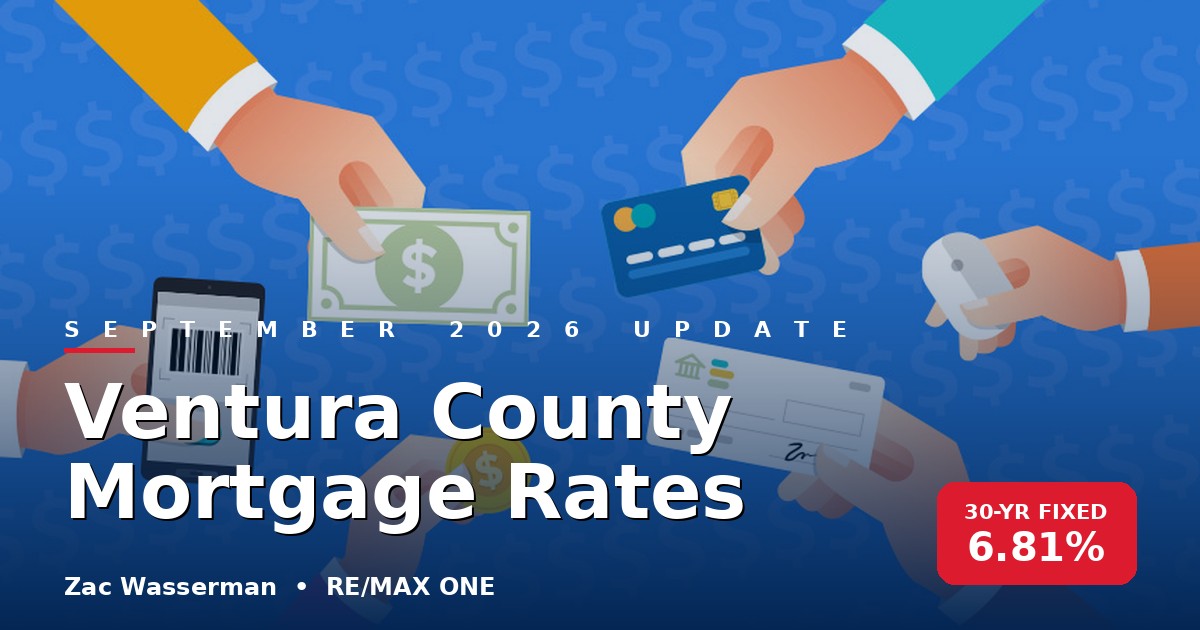
Ventura County Mortgage Rates: September 2026 Update September 2026 Mortgage Update Ventura County Mortgage Rates: September 2026 Update Rates have...

Can You Sell an ADU Separately in California? Your 2026 AB 1033 Guide for LA & Ventura County Sell an...
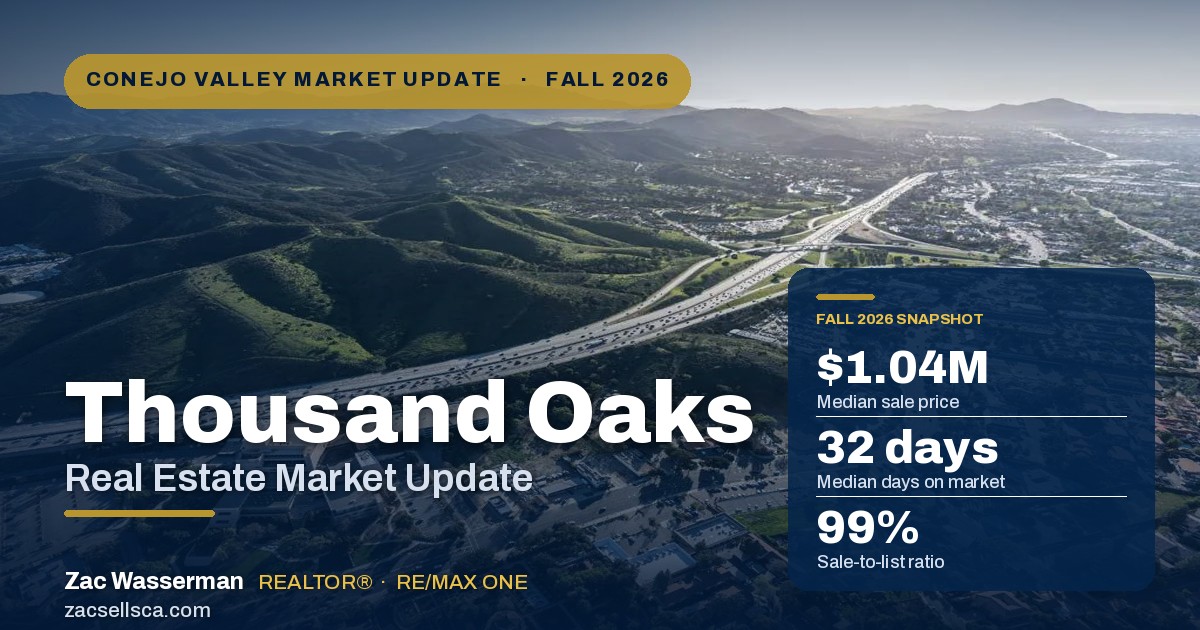
Conejo Valley Market Update · Fall 2026 Thousand Oaks Real Estate Market Update: Fall 2026 Prices remain firm, inventory is...
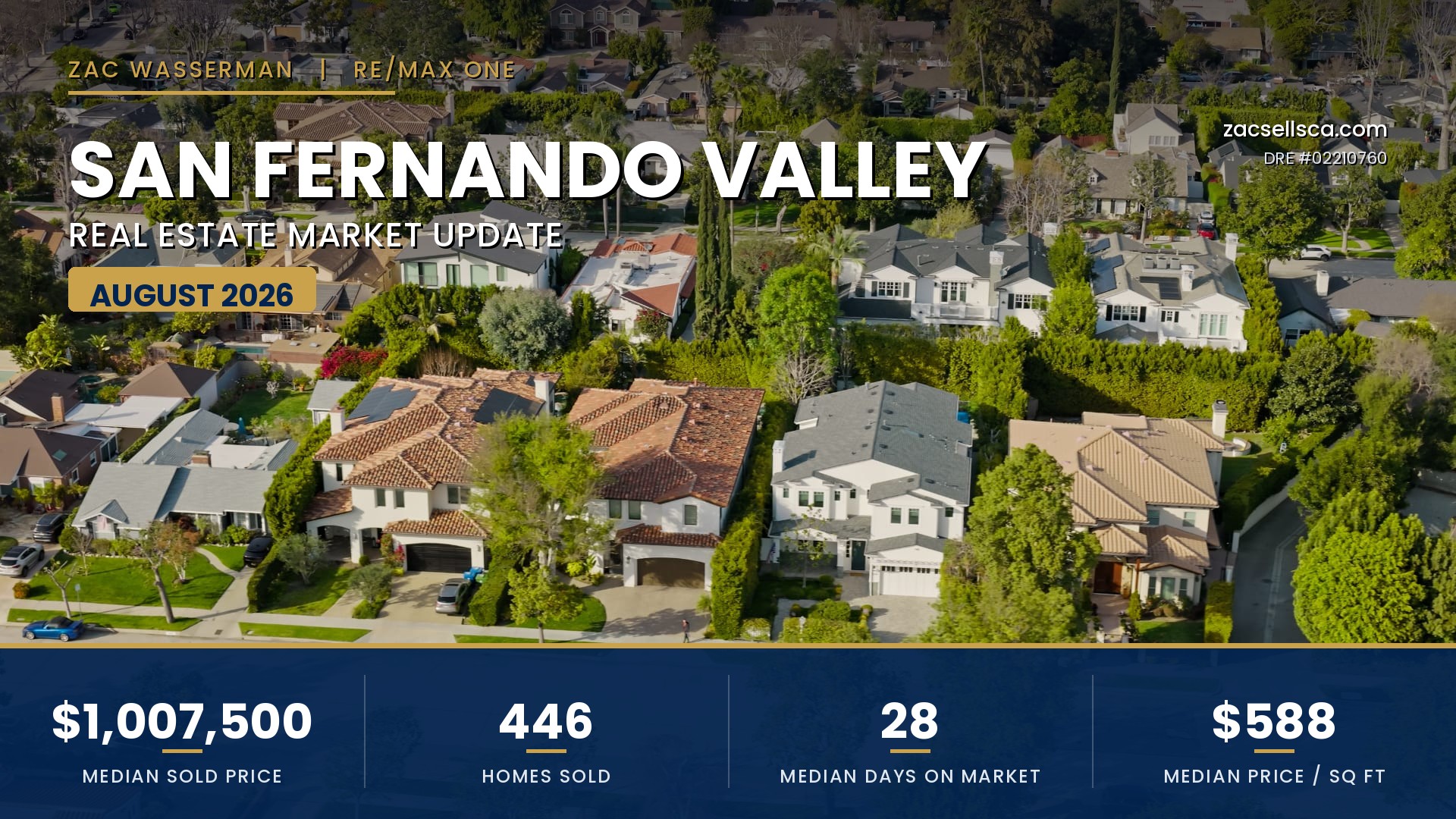
August 2026 • Local Market Report San Fernando Valley Housing Market Update: August 2026 Prices, Trends & City-by-City Data By...
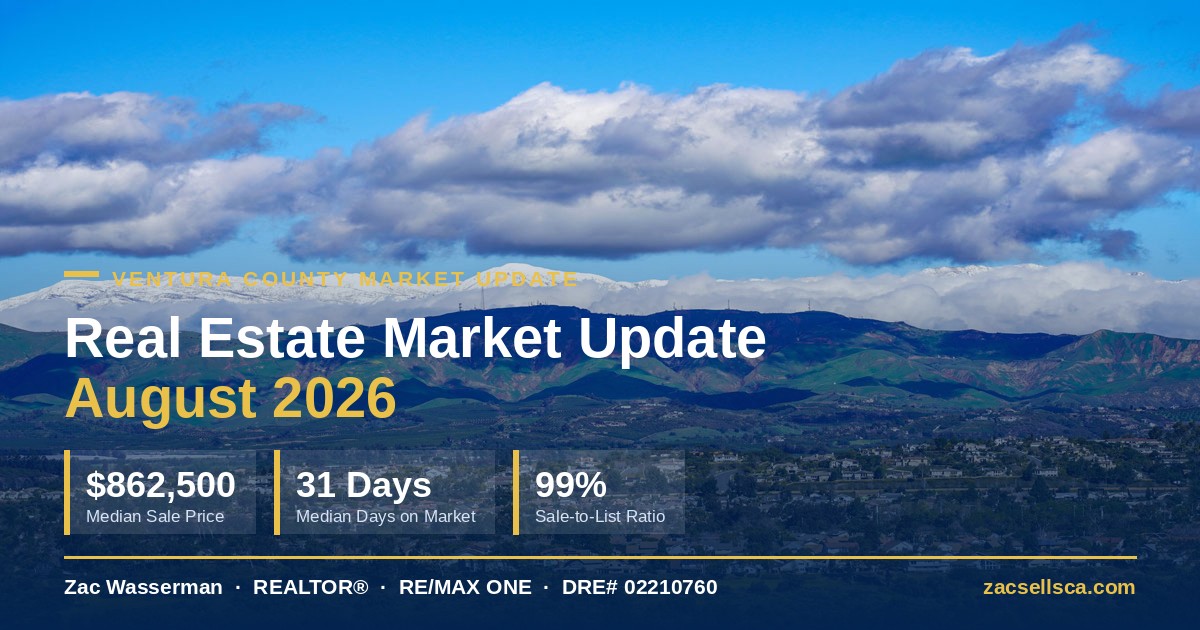
Ventura County Real Estate Market Update: August 2026 Ventura County Market Update — August 2026 Ventura County Real Estate Market...