
San Fernando Valley Real Estate Market February 2026: What Changed + Who Has Leverage

Looking for a clear San Fernando Valley real estate market February 2026 update? Below is a fast, skimmable snapshot of prices, inventory, days on market, and sale-to-list trends—plus what it means if you’re buying in the next 0–6 months or considering selling in the next 0–12.
If DOM is 28 days and sale-to-list is 99.2%, the market is rewarding listings that are priced correctly early. The biggest risk is overpricing, going stale, and negotiating from behind.
If inventory is 642 active listings and DOM is 28 days, leverage depends on micro-area and condition. Your edge comes from payment realism and targeting listings where time-on-market is stretching.
Get the SFV market email once a week: the stats that moved, what changed, and what to watch next—so you’re not relying on headlines.
Considering selling in the next 0–12 months? Get a comps-based SFV value range that accounts for condition, upgrades, and current competition.
Buying soon? Do a quick buyability check—price range, payment range, and offer-readiness so you shop with confidence.
San Fernando Valley February 2026 Market Metrics
A quick visual read on the core SFV numbers shaping buyer leverage, seller expectations, and overall market pace.
Top SFV Areas by Closed Sales
Which SFV pockets drove the most transaction volume in February 2026.
Placed directly below the snapshot and CTA row so the charts stay above the fold and support quick scanning before the deeper market breakdown.
San Fernando Valley Real Estate Market February 2026: Complete Market Snapshot
| Metric | February 2026 |
|---|---|
| Median price | $920,000 |
| Average price | $1,115,000 |
| Active listings | 642 |
| New listings | 378 |
| Sold homes (closed sales) | 284 |
| Median days on market (DOM) | 28 |
| Sale-to-list ratio | 99.2% |
| MoM change (median price) | +1.8% |
| YoY change (median price) | +3.7% |
How to use this SFV snapshot
The “right” interpretation depends on segment. In the San Fernando Valley real estate market February 2026, the most reliable way to apply these numbers is to use them as a baseline, then overlay three micro-market questions: (1) What are the closest comps in your neighborhood for similar condition and lot size? (2) How quickly are those comps going pending relative to the 28-day median? (3) Are closed sales landing near list (99.2%) or are they consistently closing lower because of concessions?
Buyers can use the snapshot to decide where to negotiate (homes above the median DOM and those with recurring price reductions). Sellers can use it to decide how aggressive to be on pricing and terms: when sale-to-list stays near parity, the “best” listings are still clearing close to ask, but the market corrects overpricing quickly.
San Fernando Valley Real Estate Market February 2026: Price Trends & Momentum
February pricing doesn’t just answer “up or down”—it shows whether buyers are paying up for the best homes or negotiating harder on anything with friction. In the San Fernando Valley real estate market February 2026, the median at $920,000 and average at $1,115,000 point to segmentation: premium closings can lift the average even when most buyers are still shopping under $1M.
The San Fernando Valley real estate market February 2026 pricing data shows the market rewarding quality and penalizing overreach. Upper-end sales in areas like Studio City and Encino helped pull the $1,115,000 average higher, while the $920,000 median reflects the more attainable core of the market. This gap between median and average is important: it means sellers can't rely on countywide headlines when pricing—they need recent comps that match their specific segment, condition, and micro-location within the Valley.
Practically, this means two different buyers can have two completely different experiences in the same month: a turnkey home in a premium pocket may attract multiple strong offers, while a similar-priced home with condition or location friction can sit and invite concessions. Reading price without pace (DOM) and final terms (sale-to-list) is where most people get misled.
For national housing market context, see the National Association of REALTORS® existing home sales data.
Local money-page context: If your budget lands near conforming vs jumbo thresholds, loan structure can change buying power and negotiation strategy. 2026 Loan Limits (Ventura + LA)
San Fernando Valley Real Estate Market February 2026: Inventory & New Listings Analysis
Inventory is where leverage is created. More choice typically means buyers negotiate harder; constrained choice usually pushes cleaner terms for well-positioned listings. In the San Fernando Valley real estate market February 2026, SFV posted 642 active listings, 378 new listings, and 284 closed sales—a combination that reads as “active but rational.”
Understanding median vs average pricing helps interpret market data, as explained in U.S. Census Bureau housing statistics.
Next 30–60 days (practical outlook): If new listings continue outpacing sales, expect more price discovery and longer negotiations—especially on homes that are overpriced or have avoidable friction (condition, layout, location constraints). If sales keep up, the best homes can still move fast even if the “average” feels slower.
Inventory strategy: what to watch week-to-week
In the San Fernando Valley real estate market February 2026, inventory isn’t just a count—it’s a signal about competition and pricing discipline. Watch whether new listings cluster into specific segments (entry-level single-family vs higher-end turnkey). When inventory builds in a segment and DOM rises, buyers can negotiate more aggressively. When inventory stays thin in a segment and DOM compresses, sellers can prioritize clean terms and tighter concessions.
Cash-to-close still matters: When buyers and sellers negotiate credits, concessions, and repairs, knowing the true cash-to-close keeps deals clean. Closing Costs 2026 (Cash-to-Close)
San Fernando Valley Real Estate Market February 2026: Demand Signals (DOM + Sale-to-List)
Two stats decide who’s negotiating from strength: how long homes take to sell and how close sales are to list price. In the San Fernando Valley real estate market February 2026, SFV posted a 28-day median DOM and a 99.2% sale-to-list ratio.
Quick leverage read: Seller-leaning = DOM tightening + sale-to-list near/above 100%. Buyer-leaning = DOM stretching + sale-to-list sliding + more stale inventory. February’s numbers suggest “balanced-to-seller” for properly positioned homes, and “buyer-leaning” for listings that miss pricing or presentation.
San Fernando Valley Real Estate Market February 2026: Key Trends Shaping Buyer & Seller Leverage
Several important trends are shaping the San Fernando Valley real estate market February 2026 that both buyers and sellers should understand. The goal is to watch how the stats move together—because leverage is usually created by the relationship between inventory, pace, and final sale terms.
- Inventory building gradually: With 642 active listings and 378 new listings this month, supply is expanding slowly. If this trend continues while sales pace holds steady around 284 per month, buyer leverage may improve in Q2 2026.
- Days on market stabilizing: The 28-day median DOM suggests homes are moving at a rational pace—not instant, but not stagnating. Properties exceeding 35–40 days are signaling pricing or presentation issues that sellers should address quickly.
- Sale-to-list near parity: At 99.2%, most homes are selling just below asking price. This means aggressive overpricing gets checked quickly by the market, but realistic pricing still delivers clean transactions with minimal negotiation friction.
- Submarket divergence continues: Premium areas like Encino ($1,450K median) and Studio City ($1,285K median) command significant premiums over entry markets like Northridge ($775K median) and Woodland Hills ($895K median). Strategy must match the specific Valley micro-market.
- Price-to-fundamentals alignment: The gap between median ($920K) and average ($1,115K) shows upper-end sales pulling the average higher while the core market remains below $1M. This creates opportunities for buyers willing to target homes slightly outside premium micro-areas.
The smartest approach in the San Fernando Valley real estate market February 2026 is watching these trends together rather than reacting to any single stat in isolation. Price, inventory, days on market, and sale-to-list ratios tell different parts of the story—the complete picture emerges when you connect them and apply them to your specific target neighborhood within the Valley.
Buyer Game Plan: How to Win in the San Fernando Valley Real Estate Market February 2026
- Shop by payment, not list price: confirm your realistic monthly payment range, reserves, and cash-to-close so you can move quickly on the right home.
- Target negotiable inventory: listings past 14–21 days often have more flexibility, especially if showings slowed or price reductions occurred.
- Anchor to comps: list price is an asking price; comps show the clearing price in that micro-area and condition bracket.
- Be offer-ready: clean pre-approval, verified down payment, and documented cash-to-close remove friction and strengthen your terms.
- Match strategy to leverage: move with strong terms where the home is scarce; negotiate hard where the home is sitting.
The Consumer Financial Protection Bureau provides comprehensive homebuying resources covering affordability planning and budgeting.
Insurance can change timelines and lender requirements—plan it early in the process: Home Insurance 2026 (FAIR Plan + DIC)
Seller Game Plan: How to Win in the San Fernando Valley Real Estate Market February 2026
- Price for the first 7–14 days: overpricing invites the “stale listing” problem and pushes you into concessions later.
- Reduce friction: clean disclosures, clear repair plan (or credit plan), and easy access for showings expands your buyer pool.
- Choose your negotiation levers: decide in advance whether you’ll trade price, credits, repairs, or timing—then negotiate with intention.
- Market to the likely buyer: turnkey and value-add attract different demand; your strategy should match the segment that will pay the most.
- Use DOM + sale-to-list as your compass: if showings are light and you cross 28–35 days, adjust strategy quickly while buyer attention still exists.
If you’re considering selling within 0–12 months, start with a comps-based range that reflects condition and competition: Home Value Report (Comps-Based SFV Range)
Submarket Highlights in the San Fernando Valley Real Estate Market February 2026
San Fernando Valley Real Estate Market February 2026: FAQs
Is the SFV market cooling or heating up in February 2026?
Watch median DOM, sale-to-list, and new listings vs sold homes together. When DOM tightens and sale-to-list holds firm, leverage tilts toward sellers. When DOM stretches and listings build, buyers gain negotiation room.
Are SFV homes selling over asking right now?
The sale-to-list ratio at 99.2% shows most homes selling just below asking. Over-asking behavior typically concentrates on well-positioned homes in micro-areas with limited supply.
How do loan limits affect SFV buying power in 2026?
If your purchase lands near conforming vs jumbo thresholds, your rate and cash-to-close can change significantly. Review the 2026 loan limits before setting your target range.
For additional California housing market data, see the California Association of REALTORS® market reports.
Subscribe first for weekly “what changed” stats. If you’re selling within 12 months, request a comps-based SFV value range. If you’re buying within 0–6 months, book a buyability call to confirm your realistic range and offer plan.
- All Posts
- Buyer Guides
- California Home Insurance & Wildfire Risk
- Home Financing (Mortgage & Loan Guides)
- Market Updates & Forecasts
- Seller Guides
- Back
- Ventura County Real Estate Market Updates
- San Fernando Valley Real Estate Market Updates (Monthly): Prices, Inventory & Trends
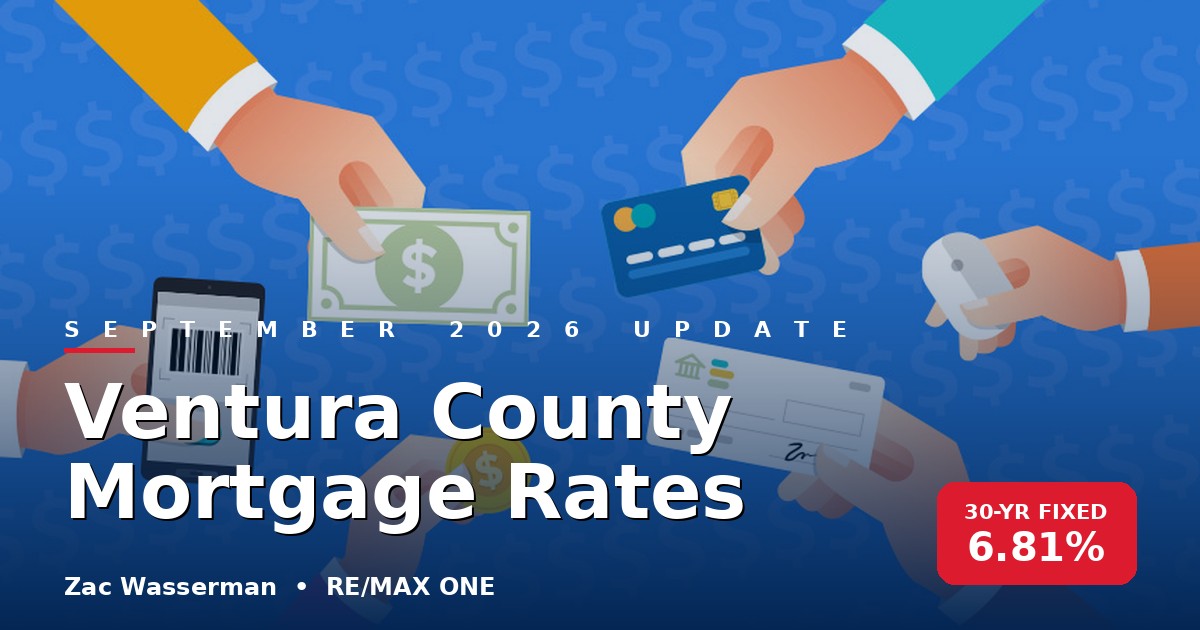
Ventura County Mortgage Rates: September 2026 Update September 2026 Mortgage Update Ventura County Mortgage Rates: September 2026 Update Rates have...

Can You Sell an ADU Separately in California? Your 2026 AB 1033 Guide for LA & Ventura County Sell an...
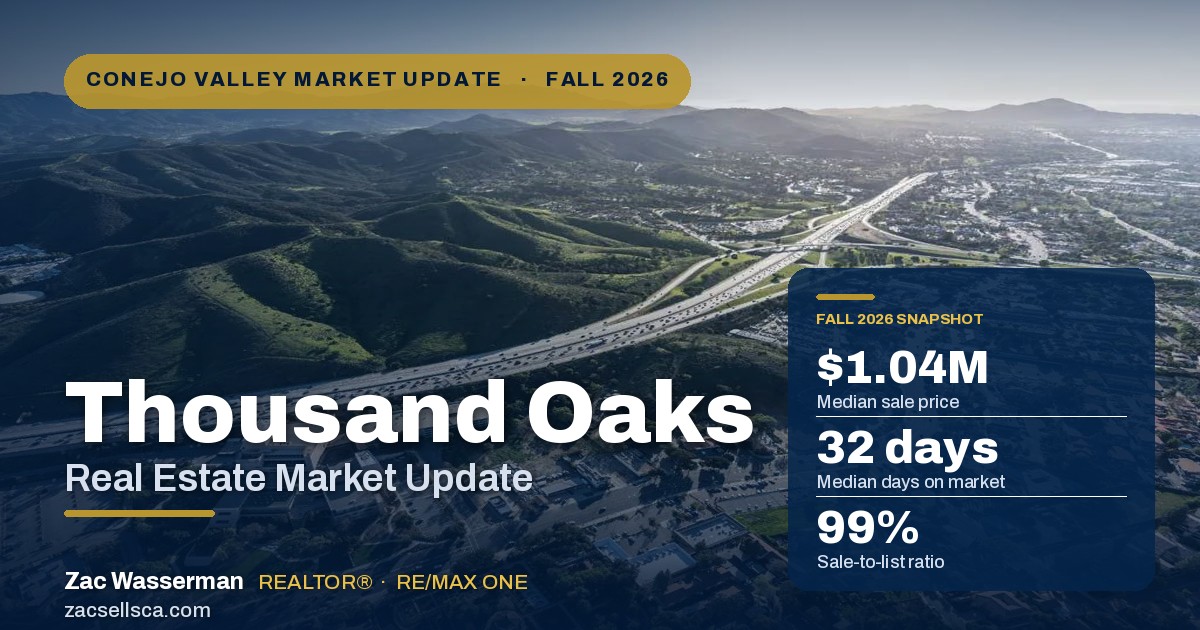
Conejo Valley Market Update · Fall 2026 Thousand Oaks Real Estate Market Update: Fall 2026 Prices remain firm, inventory is...
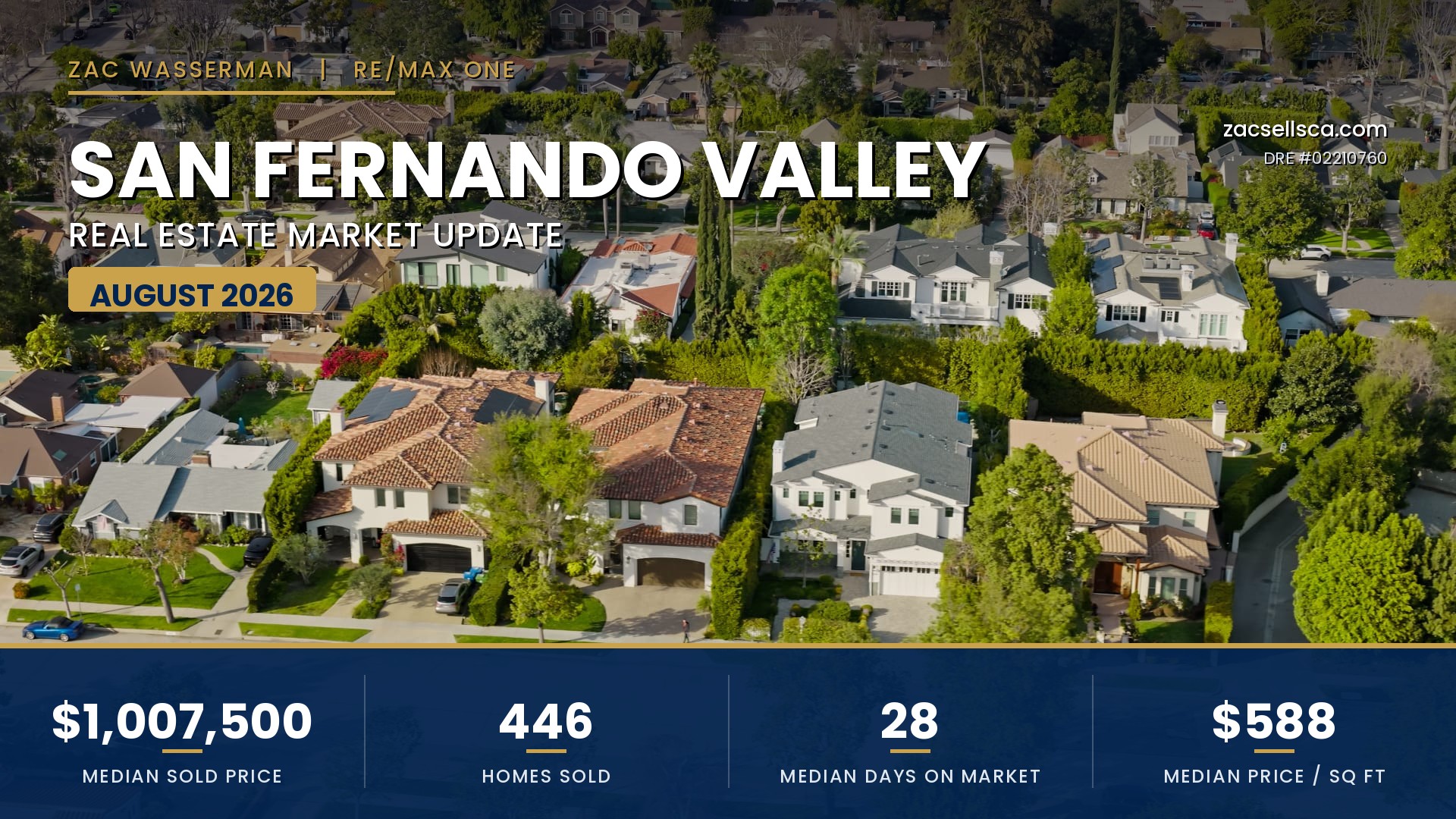
August 2026 • Local Market Report San Fernando Valley Housing Market Update: August 2026 Prices, Trends & City-by-City Data By...
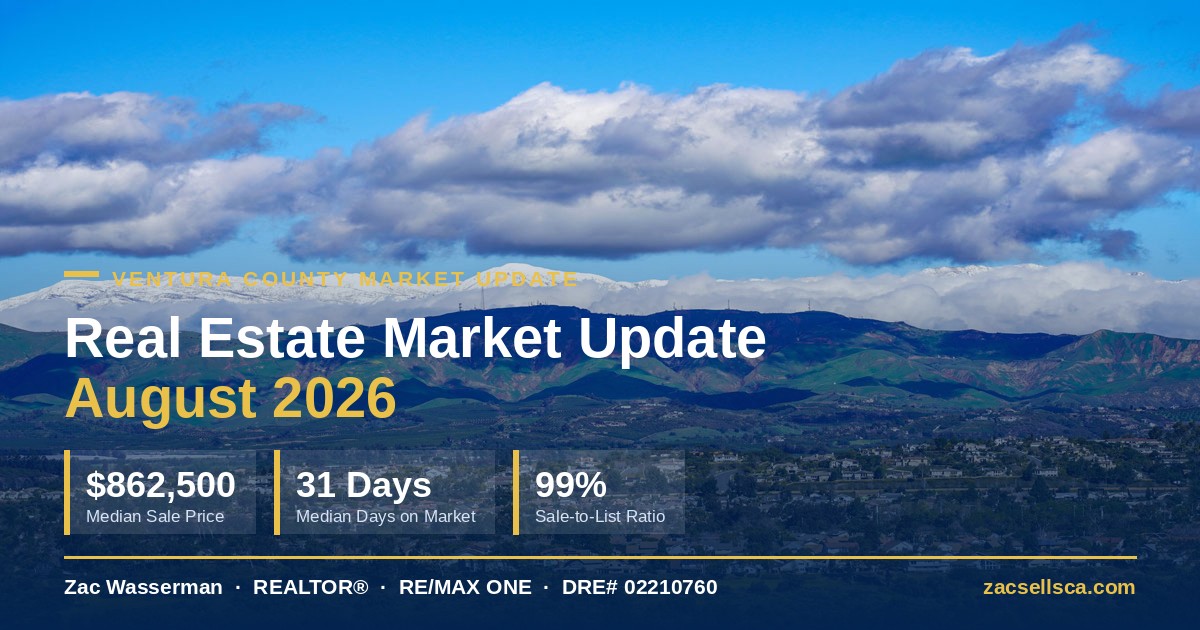
Ventura County Real Estate Market Update: August 2026 Ventura County Market Update — August 2026 Ventura County Real Estate Market...

Ventura County Real Estate Guide • 2026 Ventura County Foreclosures in 2026: How to Buy Smart or Sell Fast A...