October 12, 2026/
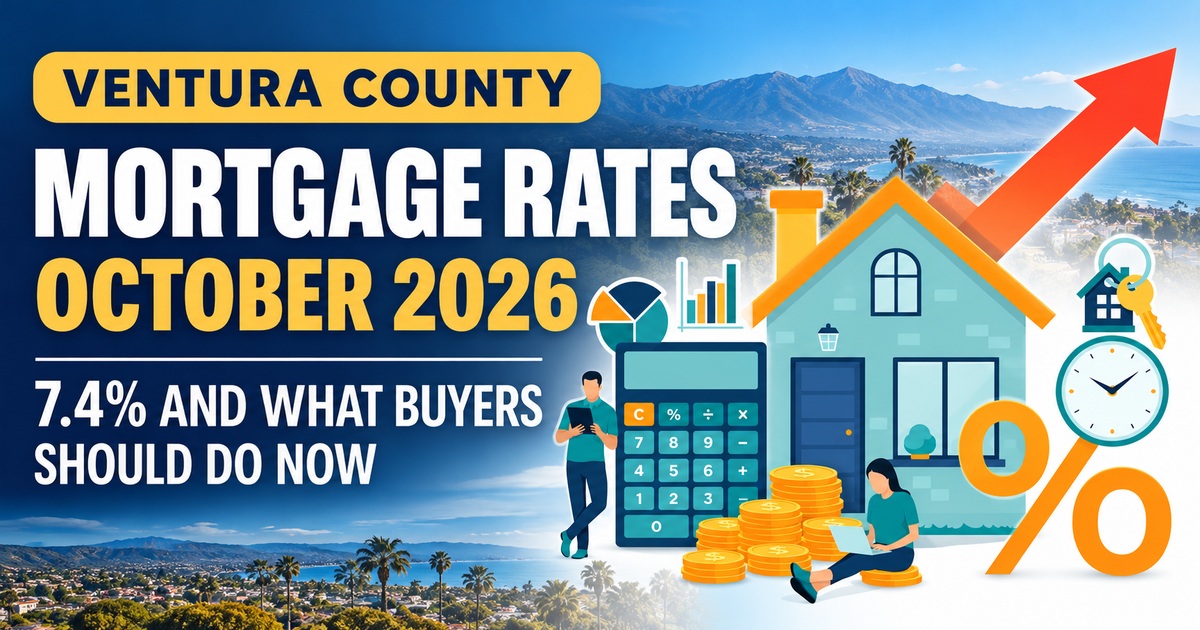
Ventura County Mortgage Rates October 2026 October 2026 Mortgage Market Update Ventura County Mortgage Rates October 2026: 7.4% and What...

A straight-talk breakdown of what buyers typically pay at closing in Ventura County vs Los Angeles County, what changes by city and loan type, and how credits can reduce cash to close without guesswork.
In real transactions, “closing costs” is shorthand for a bundle of line items that appear on your Loan Estimate (LE) and Closing Disclosure (CD). Some are true fees (escrow, title, lender charges). Others are timing-based prepaids (insurance, prepaid interest) and impounds (an escrow account your lender may require to collect property taxes and insurance monthly). This is why two buyers can purchase similar homes and still have noticeably different “cash to close” numbers.
For Ventura County vs Los Angeles County, the “county difference” is rarely your lender fees. The bigger differences tend to show up in (a) transfer tax rules (county plus city add-ons), (b) HOA documentation and transfer fees when applicable, and (c) insurance timelines and premium assumptions depending on the property and location. If you’re planning across both counties, it helps to start with the appropriate hubs for neighborhood-level context: Ventura County hub, Los Angeles County hub, and SFV hub.
Typical range framework (not advice): many buyers see buyer-side closing costs + prepaids land around ~1.5%–3.5% of purchase price, but that range expands or tightens based on credits, closing date, insurance assumptions, and impound setup. This guide shows realistic ranges and where credits can help, then gives you a timeline so you know when the numbers become “real.”
If you want a single starting point to organize your budget, timelines, and questions for your lender, use the Buyer Resources hub. If you’re comparing strategy (leverage, concessions, and credit patterns) based on broader market conditions, review the 2026 Southern California Housing Market Forecast.
Market context links: SFV Market Update (January 2026) • 2026 Forecast • Ventura County Market Update (latest) (Link to be added when published)
Closing costs can feel vague until you see them grouped the same way lenders group them on a Loan Estimate. A simple way to stay organized is to plan in three buckets: (1) lender + financing items, (2) escrow/title + recording/transfer items, and (3) prepaids/impounds. If you want a parallel guide to prep the financing side before you’re under contract, start with the Mortgage Pre-Approval Guide 2026, then cross-check your budget plan with the First-Time Homebuyer Guide 2026.
Helpful next reads: Pre-Approval Guide • Buyer Resources • First-Time Buyer Guide
If you’re buying in LA County and want area-level navigation first, start at the LA County hub or the SFV hub. For Ventura County navigation, start at the Ventura County hub.
Prefer calculators to rough in the numbers before you get an official LE? Use a payment calculator and affordability calculator as a starting point, then replace assumptions with your actual quote and property taxes/HOA.
Closing costs are not a single quote you get once and forget. They tighten into “real numbers” in phases as the lender issues disclosures, escrow orders documents, HOA fees get confirmed, insurance gets bound, and prorations become final. If you understand when each cost becomes knowable, you avoid two common problems: (1) underestimating cash to close early, and (2) discovering late-stage line items you could have planned for. Use this 30-day framework as a practical checklist; your exact timeline can be shorter or longer depending on the contract and lender workflow.
This is where good buyers separate “internet averages” from a realistic budget range. Start by asking your lender for a simple fee worksheet that mirrors the Loan Estimate buckets (lender fees, title/escrow estimate, prepaids/impounds assumptions). Next, do a quick check on city transfer taxes for the specific city you’re targeting—especially in Los Angeles County where city-by-city variation can matter. If the property is a condo/townhome/PUD, request a preliminary estimate of HOA documentation and transfer fees (these can be meaningful and sometimes arrive late if not requested early).
Use the Buyer Resources hub to set up your budget checklist and questions, then pair it with the Pre-Approval Guide 2026 so your financing assumptions match lender reality. If this is your first purchase (or your first purchase in a while), the First-Time Homebuyer Guide 2026 helps you map “cash to close” vs “monthly payment” so you don’t confuse down payment with closing costs.
Navigation shortcuts while you build your target list: Ventura County hub • LA County hub • SFV hub
Once your offer is accepted, your lender typically issues a Loan Estimate (LE) within three business days. This is where your “range” starts converting into a structured breakdown. Compare the LE to your pre-offer assumptions: lender fees, estimated title/escrow services, and the early assumptions for prepaids/impounds. If anything looks materially different, this is the best phase to ask clarifying questions because you still have time to adjust expectations.
If the property has an HOA, order HOA documents early and ask escrow (or the HOA provider) for a fee list so transfer/setup items don’t appear as a last-minute surprise. Also, this is where buyers face a practical decision on the interest-rate side—whether to lock or float—based on lender guidance, timeline, and risk tolerance (not a recommendation, just a reality of the process). Keep your checklist centralized using the Buyer Resources hub so your questions remain consistent as new documents arrive.
During this phase, you’ll often see a preliminary Closing Disclosure (CD) or updated estimates as escrow and the lender reconcile final service providers, prorations, and credits. This is also when insurance becomes operational: you’ll typically need to bind homeowner’s insurance (and confirm any lender requirements) so the policy can be reflected properly in prepaids and impounds. If you’re in areas where insurance timelines can affect the schedule, use the local guides as a reference point: Ventura Insurance Guide and LA Insurance Guide.
Closing week is about verification and execution. You’ll typically receive the final Closing Disclosure at least three business days before close for many loan types. Review the final CD against your Loan Estimate: focus on lender fees, escrow/title totals, transfer/recording items, and the big swing categories—insurance, taxes, impounds, and prepaid interest.
Practical tips: (1) treat your initial number as a range, not a promise; (2) ask for HOA fee lists early; (3) verify city transfer taxes early in LA County; (4) expect prepaids/impounds to move with closing date; and (5) keep all questions centralized using the Buyer Resources hub. If you want a broader strategy lens on negotiations and credits, reference the 2026 Forecast.
Ventura County and Los Angeles County share many of the same closing cost components, but buyers often feel differences in two places: (1) transfer tax rules and city add-ons, and (2) HOA prevalence, which can add document and transfer/setup charges. Add in the reality that Los Angeles County includes a wide range of cities—some with additional transfer taxes—and you can see why “LA closing costs” is not one fixed number.
| Cost component | Ventura County (typical patterns) | Los Angeles County (typical patterns) |
|---|---|---|
| Escrow fee | Often similar category-wide; depends on price, complexity, escrow company, and split structure. | Often similar category-wide; can vary by transaction complexity and local providers. |
| Title services | Comparable; endorsements and special title conditions can shift cost. | Comparable; endorsements can vary based on property history and lender requirements. |
| Transfer tax (county/city) | County documentary transfer tax applies; some cities have distinct handling or local customs. | County tax applies; many cities may have additional transfer taxes or rules that affect negotiations and net sheets. |
| Recording fees | County recording fees for deed/loan documents; usually modest vs other items. | County recording fees; usually modest vs other items. |
| Prepaid taxes & insurance | Driven by closing date, tax proration, insurance premium, and lender escrow setup. | Same drivers; higher premiums or property-specific insurance factors can change totals. |
| Impounds (escrow account) | Varies by lender and timing; can be a meaningful part of cash to close. | Varies by lender and timing; often noticeable on higher-priced homes due to larger deposits. |
| HOA docs + transfer fees | Present where HOA applies; doc packages and transfer/setup fees can add meaningful line items. | Often more frequent; HOA fees and doc/transfer items can be a bigger swing factor. |
| City | County Transfer Tax | City Add-On | Total Rate | Impact on $800k Sale |
|---|---|---|---|---|
| Los Angeles | $0.55 / $500 | Varies by structure | ~$0.55–$4.50 / $500 | ~$880–$7,200 |
| Culver City | $0.55 / $500 | ~$3.00 / $1,000 | Combined | ~$3,280 |
| Santa Monica | $0.55 / $500 | ~$3.00 / $1,000 | Combined | ~$3,280 |
| Pasadena | $0.55 / $500 | None (typical) | $0.55 / $500 | ~$880 |
| Burbank | $0.55 / $500 | None (typical) | $0.55 / $500 | ~$880 |
| Glendale | $0.55 / $500 | None (typical) | $0.55 / $500 | ~$880 |
| Long Beach | $0.55 / $500 | None (typical) | $0.55 / $500 | ~$880 |
| Santa Clarita | $0.55 / $500 | None (typical) | $0.55 / $500 | ~$880 |
Transfer taxes can show up in two places buyers care about: the seller’s net (because transfer taxes are often treated as a seller-side cost in many CA customs) and the offer structure (because allocation can be negotiated). The result is that a “city transfer tax” is not just an accounting detail—it can influence how sellers view price, credits, and net proceeds.
If you’re shopping across Los Angeles County, start from the LA County hub and the SFV hub. Buyers comparing Ventura County vs LA County should also keep the Ventura County hub open in a separate tab for neighborhood-by-neighborhood context.
The purpose of these scenarios is to show how closing totals move across counties and loan types in realistic 2026 price bands. These are illustrative ranges, not quotes. Your lender’s Loan Estimate is the controlling document for your loan-specific breakdown. If you’re selecting a loan program and want a cleaner starting point, the following guides provide local context: VA Loans 2026 Guide, FHA Loan Limits 2026 – Ventura County, and FHA Loan Limits 2026 – Los Angeles County.
| Scenario | Example purchase | Typical buyer closing costs + prepaids (range) | What usually drives the range |
|---|---|---|---|
| Conventional (10% down) | $700k Ventura vs $900k LA | $11k–$33k | Credits, transfer allocation, insurance/impounds, closing date, HOA docs. |
| VA ($0 down) | $750k–$1.0M typical band | $10.5k–$28.5k | Credits, prepaids/impounds, property type, lender pricing. |
| FHA (3.5% down) | $650k–$900k typical band | $12k–$31.5k | Lender fees/MI structure, prepaids/impounds, HOA docs. |
Purchase price: $700,000 Down payment: $70,000 Illustrative closing + prepaids: $14,500–$24,000
In this band, the “swing” is typically driven by impound setup (tax + insurance reserves), insurance premium timing, and whether there is an HOA. A moderate seller credit (where negotiated and allowed by program terms) can reduce the buyer’s cash-to-close while keeping the offer structure clean. For planning steps and budgeting checklists, use the Buyer Resources hub.
Illustrative total cash-to-close range: $84,500–$94,000 (down payment + closing/prepaids).
Purchase price: $900,000 Down payment: $90,000 Illustrative closing + prepaids: $18,000–$32,500
In LA County, city transfer tax assumptions can change negotiation strategy and net sheets, even if transfer tax is not always paid by the buyer. HOA document and transfer fees also appear more frequently due to property type mix. Prepaids and impounds can be larger due to higher price bands and insurance assumptions. Use the LA County hub to narrow your city/area focus and reduce surprises.
Illustrative total cash-to-close range: $108,000–$122,500.
Buyers using VA ($0 down) or FHA (3.5% down) often focus on minimizing upfront cash while keeping payments sustainable. The “closing cost” bucket can still be meaningful because prepaids/impounds don’t disappear—so the win is often a combination of (a) negotiating credits where possible and (b) choosing timing and structure that keeps totals predictable.
For program-specific starting points: VA Loans 2026 Guide, FHA Ventura 2026, FHA LA 2026, plus the Buyer Resources hub.
Illustrative takeaway: the “cash-to-close” target is driven less by county and more by credits, prepaids/impounds, and the closing date.
Want to rough in totals fast? Use a payment calculator and affordability calculator to build a first-pass budget, then replace assumptions with your lender’s LE.
The most common reason a buyer’s “closing costs” feel high is that the term bundles fees together with cash reserves created at closing: insurance premiums, tax prorations, and lender-required impound deposits. These items are highly timing-dependent and vary based on the property and lender requirements.
Insurance often shows up as both a premium payment (for an initial term) and, when impounds are required, as part of the lender’s reserve collection. In higher-risk or harder-to-place areas, buyers may see a longer shopping timeline and different premium structures depending on the carrier’s underwriting and the home’s characteristics. If insurance is a concern in your search areas, use the county-specific guides as planning references: Ventura Insurance Guide and LA Insurance Guide. This is informational only—your lender and insurance provider will confirm requirements and bind timing.
An impound account (sometimes called an escrow account) is a lender-managed reserve that collects property taxes and insurance monthly along with your mortgage payment. At closing, the lender typically funds the account with an initial deposit so the account has enough reserves before the first tax/insurance bill is due. While the exact requirement varies by lender and loan program, many buyers see initial deposits roughly in the 2–4 months range for taxes and/or insurance (illustrative, not a rule).
Two details often surprise buyers: (1) closing date matters because prorations and the timing to the next tax/insurance due date change how much reserve is needed, and (2) supplemental tax considerations can enter the conversation when assessed values reset after a sale. Supplemental taxes are not always collected at closing the same way as standard impounds, but they affect budgeting and “cash-to-close” comfort. Use the Buyer Resources hub and your lender’s LE/CD as the anchor documents for your exact setup.
Prepaid interest is typically the per-diem interest from your closing date through the end of that month. The same loan at the same rate can produce a different prepaid interest amount simply because one buyer closes on the 5th and another closes on the 25th. A basic illustrative method is: (loan amount × rate ÷ 365) × days remaining in the month. Your lender’s CD will show the exact figure.
Quick illustrative example: On a ~$900k purchase, it’s common for prepaids/impounds to make up a large portion of the total “closing costs” bucket—especially if insurance is higher than expected or the impound reserve requirement is larger due to timing. This is why buyers should treat early numbers as ranges until the LE/CD is issued.
Credits are one of the most powerful tools buyers use to manage cash-to-close, but they’re also one of the most misunderstood. The goal is not “maximum credit.” The goal is a clean structure that aligns with market value, appraisal reality, and program guidelines. For a broader negotiation context tied to leverage and concessions, review the 2026 Southern California Housing Market Forecast.
Credits typically show up in two categories: seller credits (negotiated as part of the offer) and lender credits (pricing choices where you take a higher rate in exchange for a credit, subject to lender pricing). What’s allowable and how it must be documented depends on the loan program and lender. Use the Buyer Resources hub as your checklist base, and if you’re a move-up buyer, the Seller Resources hub can help you map out net proceeds vs next purchase costs.
$850k Ventura County purchase priced at fair market value with an $8,500 seller credit applied toward allowable closing costs. The appraisal supports the contract price, the credit is cleanly documented, and the buyer reduces upfront cash without creating a valuation problem.
Why it works: market value is defensible, the credit is modest relative to price, and the structure avoids “inflating” price just to fund a credit.
Listed at $850k but “really” $835k + $15k credit. The buyer and seller attempt to fund a large credit by pushing contract price above what comparable sales support. If the appraisal comes in low, the credit strategy can unravel and force renegotiation, creating timeline and leverage issues.
Why it’s problematic: appraisal risk increases, and the buyer may end up choosing between bringing extra cash or reopening price terms.
$900k LA County purchase with $12,000 structured toward a temporary 2-1 buydown (structure varies by lender). The purchase price remains aligned with market value, and the buydown is used as a payment-management tool in years 1–2, subject to lender program documentation.
For negotiation context and when credits tend to be more common, see the 2026 market forecast.
Practical credit rule-of-thumb (not advice): A credit strategy is strongest when it is aligned with market value and documented cleanly on the LE/CD. If credits are used, confirm early how they will be applied (fees, prepaids, buydown items) and whether any caps or program rules apply.
Insurance can intersect with credits and timing because premium and bind requirements affect prepaids/impounds. If insurance is part of your risk profile, reference: Ventura Insurance Guide and LA Insurance Guide.
Buyers who stay ahead of closing costs do two things consistently: they request the right documents early, and they compare line items across documents instead of treating each update as “a new number.” Here’s a clean documentation checklist that aligns to the timeline above.
Start with the Buyer Resources hub and the Mortgage Pre-Approval Guide 2026.
Move-up buyer? Pair this with the Seller Resources hub so you can map proceeds to your next purchase.
If you want a broader market lens for leverage, credits, and seller behavior, the 2026 forecast and the SFV market update (January 2026) provide context you can use to pressure-test assumptions.
If you’re building a Ventura County vs Los Angeles County plan, you’ll make faster decisions by organizing your research into three buckets: market intelligence (where to focus and how leverage is shifting), buyer tools and program guides (so your numbers reflect your loan path), and risk management (especially insurance planning). Below are the core resources for that system.
Calculator shortcuts (links will be added when published): Payment calculator • Affordability calculator
Many buyers see buyer-side totals (fees plus prepaids/impounds) land broadly around ~1.5%–3.5% of price, but city transfer tax assumptions, HOA docs, and impound setup can materially move the number. Use the Buyer Resources hub to plan your checklist, then validate the real line items on your lender’s Loan Estimate. For county navigation, start at the Ventura County hub and the LA County hub.
In many California transactions, costs can be covered through a mix of buyer funds and negotiated credits, depending on contract terms and lender program rules. The cleanest path is to model tradeoffs early and confirm how credits will be documented on the LE/CD. Use the Buyer Resources hub to organize the questions and, for move-up buyers, the Seller Resources hub to map proceeds to your next purchase.
HOA properties can add document fees and transfer/setup charges that appear in escrow. Mello-Roos and special assessments often affect payment and underwriting documentation more than a single fee, but they can influence your budget and escrow assumptions. City transfer taxes can vary across LA County cities, so confirm city-specific assumptions early using the LA County hub and SFV hub.
The categories are similar (escrow/title, lender fees, recording, prepaids), but totals can differ based on program structure, lender pricing, and how credits are applied. Start with the program guides: VA Loans 2026, FHA Ventura, FHA LA, then confirm exact line items on your Loan Estimate.
In many cases, credits may be structured to offset certain closing costs and prepaids and sometimes buydown structures, subject to lender program guidelines. Confirm early how credits will appear on the LE/CD and how they interact with appraisal and negotiation reality. For leverage context, see the 2026 forecast.
Ideally, you start with a realistic range before you write (fee worksheet), refine once you receive the Loan Estimate after acceptance, and finalize when the Closing Disclosure is issued. The number becomes more precise as credits, prorations, and escrow account funding are confirmed. Use the Pre-Approval Guide and Buyer Resources to organize the timeline.
Prepaid interest is typically calculated as a per-diem amount from your closing date through the end of that month. A simple illustrative estimate is: (loan amount × rate ÷ 365) × days remaining in the month. Closing earlier in the month usually increases prepaid interest compared to closing later. Use the Buyer Resources hub and the Pre-Approval Guide to plan questions for your lender.
Down payment is the portion of the purchase price paid upfront; closing costs are the fees, taxes/recording items, and timing-based prepaids/impounds needed to close and set up the loan. Both can appear in “cash to close,” which is why they’re often confused, but they’re separate budget buckets. For a clean breakdown, see the First-Time Homebuyer Guide.
Use my valuation tool to get a data-driven starting point, then we can map out net proceeds vs your next purchase budget using a closing-cost-aware plan.
I’ll help you build a simple, county-aware “cash to close” range using your price band, property type, and credit strategy assumptions—without the noise.
This guide is informational and based on common California escrow/title/lending concepts and typical line items found on Loan Estimates and Closing Disclosures. For primary reference material, buyers can review: (a) the Consumer Financial Protection Bureau (CFPB) explanations of Loan Estimates/Closing Disclosures, (b) California county recorder resources for recording items, and (c) lender-provided disclosures for program-specific rules and allowable credits.

Zac Wasserman (CA DRE# 02210760) – RE/MAX ONE Straight-talk guidance for Ventura County and Los Angeles County buyers and sellers.
Phone/Text: 805.212.9147
Website: zacwasserman.goldnationsocal.com
Email: ZacSellsCA@gmail.com
Looking for more local analysis? Start here: Blog hub, Ventura County hub, Los Angeles County hub, SFV hub, and the 2026 market forecast.

Ventura County Mortgage Rates October 2026 October 2026 Mortgage Market Update Ventura County Mortgage Rates October 2026: 7.4% and What...
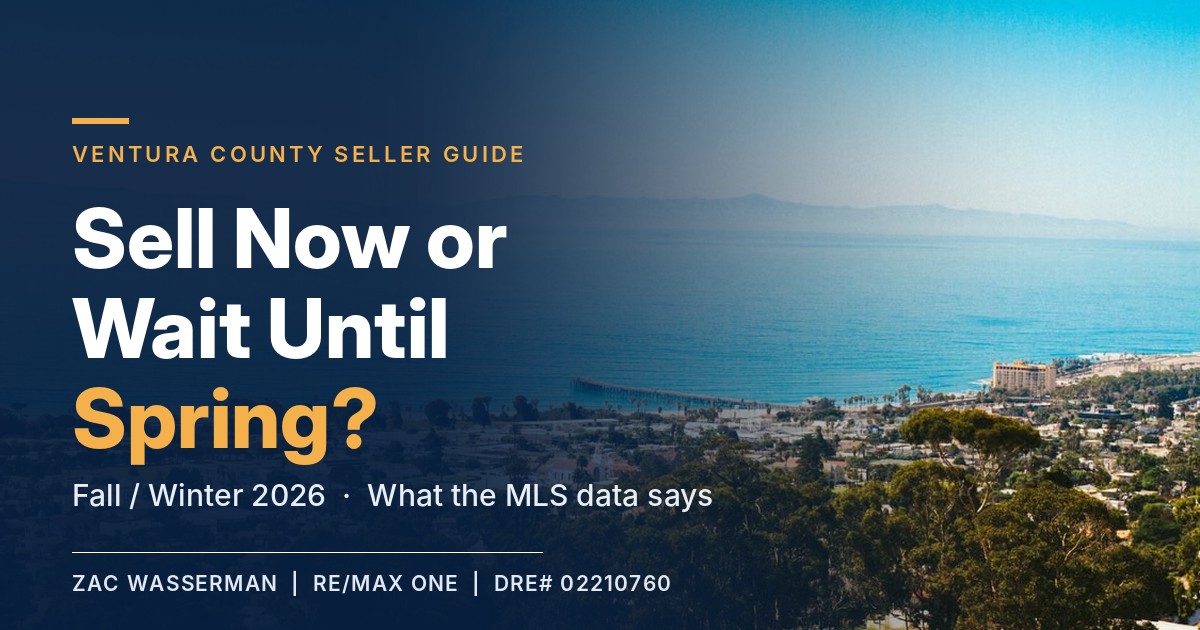
Ventura County Home Seller Guide | Fall / Winter 2026 Should You Sell Now or Wait Until Spring? Ventura County...
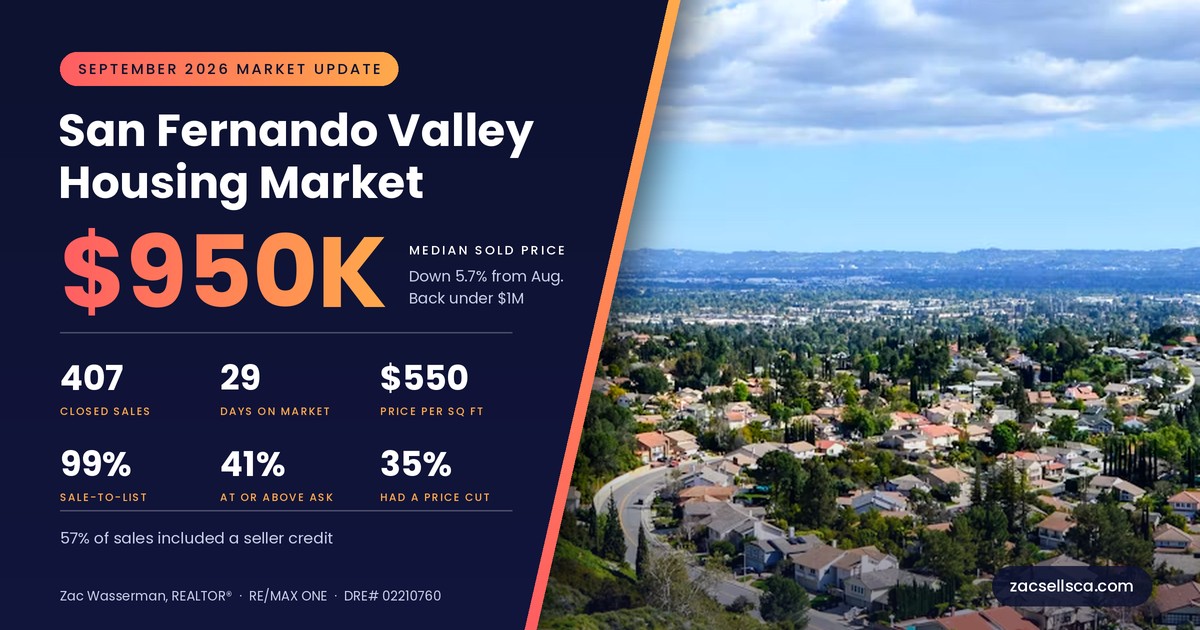
SEPTEMBER 2026 · MARKET UPDATE San Fernando Valley Housing Market Update: September 2026 Prices, Trends & City-by-City Data The median...
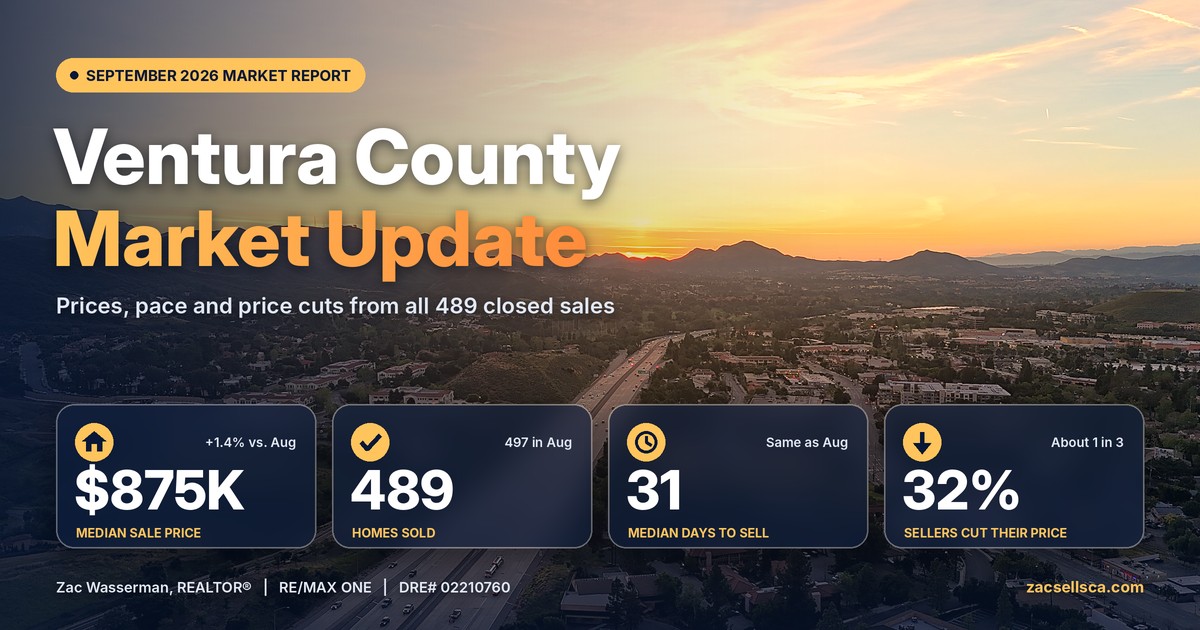
Ventura County’s September 2026 housing market: $875K median price, 489 closed sales, 31 days on market, and city-by-city data for...

State Farm filed to start writing new California home policies again, but only for homes with an IBHS Wildfire Prepared...

Encino real estate in 2026: see median home and condo prices, 494 closed sales, 91436 vs. 91316 trends, neighborhood insights,...