
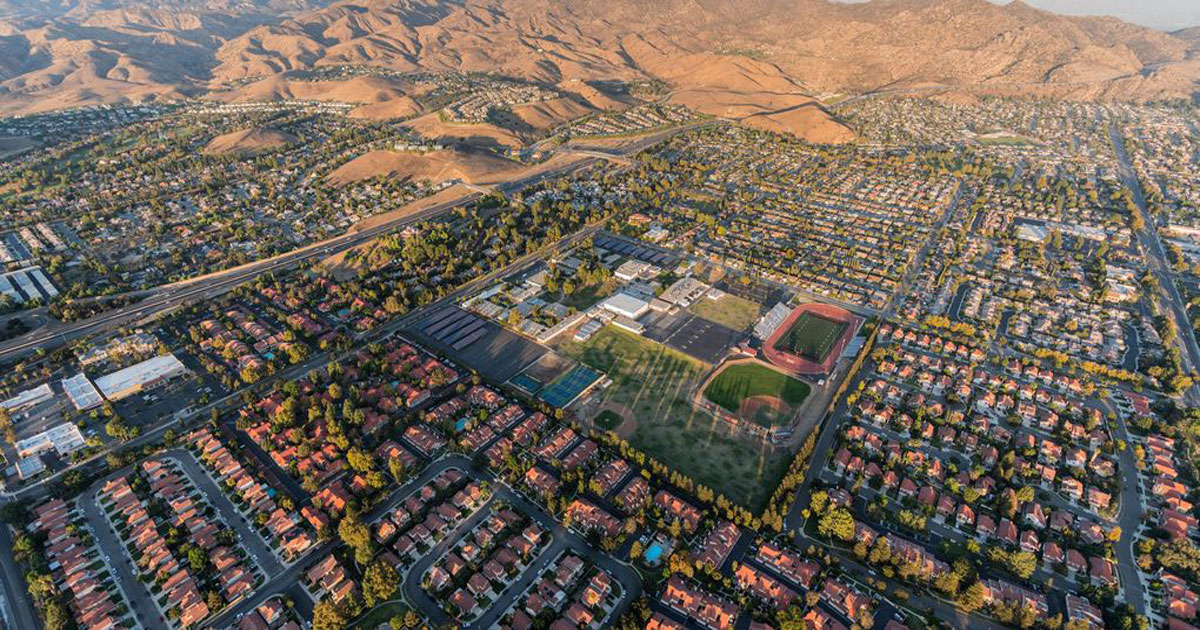
Simi Valley Real Estate Market 2026
Median Home Price in Simi Valley CA 2026: What Homeowners Need to Know
A clear, local breakdown of Simi Valley home prices, neighborhood value ranges, market trends, and what sellers should understand before pricing their home.
Find Out What Your Simi Valley Home Is WorthMedian Home Price in Simi Valley CA 2026: What Homeowners Need to Know
If you are researching Simi Valley home values, the short answer is this: most current data places Simi Valley’s median sale price in the low-to-mid $800,000s, with many sources clustering around roughly $840,000 to $850,000.
However, the more important question is not just “What is the median price?” It is “What does that number mean for your specific home?”
That distinction matters because Simi Valley is not one uniform market. Wood Ranch, Big Sky, Central Simi, East Simi, West Simi, condos, townhomes, and larger single-family homes can all perform very differently. As a result, the median price gives you a helpful starting point, but it does not replace a neighborhood-specific pricing strategy.
Below is a clear breakdown of Simi Valley home prices, local trends, neighborhood value ranges, and what homeowners should understand before making a selling decision in 2026.
Quick Seller Takeaway
Simi Valley is not a weak market, but it is a more selective one. Sellers who price accurately, prepare well, and launch with a clear strategy are in a much stronger position than sellers who rely only on broad online estimates.
Median Home Price Simi Valley CA 2026: The Quick Answer
The median home price Simi Valley CA 2026 is currently best understood as a working range between about $832,500 and $850,000, depending on the source, property type, and reporting month.
Houzeo’s 2026 Simi Valley housing market data showed a February 2026 median sale price of $832,500, with days on market around 60.5 days, a sale-to-list ratio near 98.61%, and 169 homes sold. Houzeo reported this as part of its local Simi Valley market snapshot.
Redfin’s city-level Simi Valley market data has shown a median sale price near the mid-$800,000s, while Zillow’s Simi Valley home value data has also remained in the low-to-mid $800,000 range. You can compare the latest public data directly through Redfin’s Simi Valley housing market page and Zillow’s Simi Valley home value page.
So, while every data source uses a slightly different methodology, the story is fairly consistent: Simi Valley home values are not collapsing, but they are also not rising aggressively across the board. Instead, the market is more balanced, more price-sensitive, and more segmented than it was during the ultra-competitive years.
For homeowners, that means pricing strategy matters more than ever.
What the 2026 Simi Valley Housing Data Shows
The 2026 Simi Valley real estate market is best described as steady, but selective.
According to the data available for February and March 2026, Simi Valley’s median sale price has been hovering around the low-to-mid $800,000s. Houzeo reported a February 2026 median sale price of $832,500, with a sale-to-list ratio near 98.61%, days on market around 60.5 days, and 169 homes sold, up sharply year over year.
Additionally, InSimiValley.com’s March 2026 data showed a median sale price of $840,000, an average sale price of $906,052, 57 days on market, a 98.7% sale-to-list ratio, 50 closed sales, 99 pending sales, and 61 new listings.
When you put these numbers together, a few patterns become clear:
| Metric | 2026 Simi Valley Market Signal |
|---|---|
| Median sale price range | Roughly $832,500–$850,000 |
| Working median range | About $840,000–$850,000 |
| Days on market | Roughly 42–62 days, depending on source and segment |
| Sale-to-list ratio | About 98.6%–98.7% |
| Year-over-year price movement | Modest, roughly flat to slightly positive depending on source |
| Inventory | Still limited, but buyers are more selective |
| Market condition | Neutral to balanced |
Therefore, the market is not “bad.” It is simply less forgiving.
A well-priced, well-prepared home can still attract strong buyer attention. However, a home that is priced too aggressively may sit, reduce, and ultimately sell for less than it could have with a tighter launch strategy.
Why Simi Valley Prices Are Holding Steady
Simi Valley continues to hold value because it offers a combination of space, suburban lifestyle, relative affordability, and access to both Ventura County and the San Fernando Valley.
Compared to Thousand Oaks, where the median price is around the low $1 million range in many 2026 market discussions, Simi Valley often gives buyers more house for the money. In practical terms, Simi Valley can offer roughly 20% more value per dollar compared with Thousand Oaks, depending on neighborhood, property condition, lot size, and school-area demand.
That value gap matters.
Many buyers who initially search in Thousand Oaks, Westlake Village, or parts of the Conejo Valley eventually compare Simi Valley because they can often find larger lots, more square footage, or a more attainable monthly payment. Similarly, some buyers priced out of Moorpark or certain Conejo Valley neighborhoods may consider Simi Valley as a practical alternative.
However, affordability is still a constraint. Mortgage rates, insurance costs, property taxes, and monthly payment sensitivity all affect buyer behavior. Consequently, buyers are looking closely at price, condition, commute, updates, layout, and resale value before making offers.
That is why what homes are selling for in Simi Valley is only part of the story. The better question is whether your home sits above, below, or right in line with buyer expectations for its neighborhood and condition.
Simi Valley Neighborhood Price Ranges in 2026
Simi Valley’s median price can be misleading if you apply it too broadly. A condo, an older West Simi single-family home, a Central Simi tract home, and a Wood Ranch property are not competing in the same exact buyer pool.
Here is a practical 2026 neighborhood price breakdown:
| Simi Valley Area / Segment | Approximate 2026 Price Range | Market Notes |
|---|---|---|
| Wood Ranch | ~$1.1M–$1.5M+ | Premium golf course community, larger homes, strong lifestyle appeal |
| East Simi Valley / Big Sky | ~$750K–$950K | Newer tract homes, hillside settings, strong buyer interest |
| Central Simi Valley | ~$800K–$950K | Established neighborhoods, broadest inventory, steady demand |
| West Simi Valley | ~$700K–$850K | Older homes, more affordable entry point, value-driven buyers |
| Condos / Townhomes | ~$388K–$725K | Strong first-time buyer and affordability-driven segment |
Wood Ranch is the clear premium segment, with single-family median values around $1,225,000 based on the available neighborhood data. These homes often attract move-up buyers looking for lifestyle, setting, and neighborhood feel.
East Simi and Big Sky can perform well because buyers like the newer tract feel, hillside views, and more modern layouts in certain pockets. Meanwhile, Central Simi has some of the most consistent activity because it offers a broad mix of homes, price points, and buyer demand.
West Simi Valley often appeals to buyers who want to stay under the higher price thresholds while still buying a single-family home. Additionally, condos and townhomes remain important because affordability has become a major driver in Ventura County.
Instead of using one citywide median number to price a property, the right pricing strategy should factor in neighborhood, property type, condition, upgrades, lot size, location, floor plan, and current competing inventory.
Simi Valley vs Nearby Ventura County Cities
Simi Valley’s value proposition becomes clearer when you compare it with nearby Ventura County and Conejo Valley cities.
| City | Approximate 2026 Market Position | Typical Buyer Perception |
|---|---|---|
| Simi Valley | ~$840K–$850K median range | More value per dollar, strong suburban option |
| Thousand Oaks | Around ~$1.03M median range | Higher-priced Conejo Valley market with strong demand |
| Camarillo | Mid-to-high $800Ks, varies by segment | Balanced lifestyle, coastal access, strong seller interest |
| Moorpark | Upper $800Ks to $900Ks+ | Smaller inventory, family-oriented suburban demand |
| Westlake Village | Often $1.2M+ depending on segment | Premium luxury and lifestyle-driven market |
| Oxnard | Lower than Conejo Valley, varies widely by coastal/inland area | More affordability, broad property mix |
Compared with the median home price in Thousand Oaks, Simi Valley generally offers a lower entry point while still giving buyers access to Ventura County, suburban neighborhoods, and larger-home options. For a homeowner, that creates an important selling angle.
If your Simi Valley home is priced correctly, it can appeal to multiple buyer groups: local move-up buyers, San Fernando Valley buyers moving west, Conejo Valley buyers seeking more affordability, and first-time buyers looking at townhomes or condos.
However, this also means buyers are comparing your home against multiple nearby markets. Therefore, presentation and pricing need to make sense not only within Simi Valley, but also against Moorpark, Camarillo, Thousand Oaks, and parts of the San Fernando Valley.
For broader context, it is helpful to review the overall Ventura County housing market 2026 and the Ventura County housing market Q1 2026 trends because city-level pricing does not happen in isolation.
Want to know where your Simi Valley home fits in today’s market?
The citywide median is helpful, but your neighborhood, condition, upgrades, and current competition matter more.
Get a Free Home ValuationWhat This Means If You Own a Home in Simi Valley
If you own a home in Simi Valley, the 2026 data suggests you may still have a strong equity position, especially if you bought before the rapid appreciation years or have owned the home for several years.
However, equity on paper and buyer demand in the current market are not the same thing.
A homeowner might see a citywide median price around $840,000 and assume their home should sell at or above that number. In some cases, that may be true. In other cases, the home may need updates, may compete with newer inventory, or may sit in a more price-sensitive segment.
This is also where automated estimates can miss the mark. A Zestimate, Redfin Estimate, or other online valuation can be helpful as a starting point, but Simi Valley has too many micro-neighborhood differences for an algorithm to fully capture the story. Wood Ranch does not price the same way as Big Sky. Central Simi does not always move like East Simi. West Simi can attract a different buyer profile than a newer hillside tract home. Therefore, two homes with similar square footage can have very different values depending on location, condition, lot, views, and buyer demand at that exact moment.
For example, HOA presence can affect both buyer perception and monthly affordability. Some buyers are comfortable paying for community amenities, while others avoid HOA costs altogether. Similarly, lot premiums can shift value significantly within the same zip code. A flat, usable lot may attract different demand than a smaller hillside lot, and a view property can command a premium when the setting feels private, open, or unique.
Single-story homes are another major factor in Simi Valley home values. Many buyers specifically search for single-level living because of long-term convenience, accessibility, or lifestyle preference. As a result, a well-located single-story home can perform differently than a two-story home with similar square footage, especially if the floor plan feels functional and the lot is usable.
Update quality also matters more than most automated tools can measure. A home with newer windows, a remodeled kitchen, upgraded bathrooms, fresh flooring, newer HVAC, or strong curb appeal may create a different buyer response than a home with similar size but dated finishes. On the other hand, not every update produces the same return. Buyers can tell the difference between thoughtful improvements and quick cosmetic changes.
That is why home prices in Simi Valley need to be evaluated at the neighborhood and property level. The most accurate pricing conversation should look at what homes are selling for in Simi Valley right now, which listings are sitting, which ones are going pending quickly, and how your home compares to the current buyer alternatives. In a balanced market, those details can be the difference between a strong launch and a stale listing.
Additionally, the sale-to-list ratio around 98.6%–98.7% tells us that many homes are not selling far over asking. Instead, buyers are negotiating, comparing options, and responding to pricing discipline.
That does not mean sellers are losing leverage. It means the leverage has shifted toward well-positioned sellers.
The best results usually come from homes that are:
- Priced accurately from day one
- Clean, prepared, and easy to show
- Marketed with strong photos and clear positioning
- Compared against active, pending, and recent sold competition
- Launched with a strategy instead of a hopeful list price
As a result, the question should not be, “Can I sell?” The better question is, “What would buyers realistically pay for my specific home right now?”
That is where a free home valuation can be useful, especially if it looks at your neighborhood and not just an automated citywide estimate.
How to Price a Simi Valley Home in Today’s Market
Pricing a Simi Valley home in 2026 requires more nuance than simply checking an online estimate.
Zillow’s Simi Valley home value data can be helpful for a rough starting point; however, automated valuation models do not always account for interior upgrades, view lots, floor plan issues, deferred maintenance, exact neighborhood demand, or the quality of current competition.
Similarly, Redfin’s Simi Valley housing data gives useful market context, but that does not mean every home is guaranteed multiple strong offers or the same selling timeline.
The right pricing process should include:
- Recent sold homes
These show what buyers have actually paid. - Pending homes
These show where the market is moving now. - Active competition
These are the homes buyers will compare against yours this week. - Withdrawn and reduced listings
These show where sellers may have overshot the market. - Condition and presentation adjustments
Updated homes and dated homes can produce very different outcomes. - Buyer payment sensitivity
In 2026, buyers are highly aware of monthly payment, not just purchase price.
Therefore, the best pricing strategy is not always the highest list price. In many cases, the best strategy is the price that creates the strongest buyer response, especially in the first 7–14 days.
If the home is priced too high, buyers may wait. If it is priced correctly, buyers are more likely to engage, schedule showings, and write stronger offers.
Should You Sell Your Simi Valley Home in 2026?
Whether you should sell depends on your goals, equity position, next move, and timeline.
If you are moving up, downsizing, relocating, dealing with life changes, or trying to access built-up equity, 2026 may still be a good year to sell. Simi Valley values remain elevated compared with pre-pandemic levels, and demand is still present for homes that are positioned well.
However, sellers need to be realistic. The market is not rewarding every listing equally. Buyers are more selective, and they are paying attention to condition, price, location, and value.
If you are trying to decide should you sell your house in 2026, start by answering these questions:
- How much equity do you likely have?
- What would you buy or rent next?
- Is your home in showing-ready condition?
- Are there repairs or updates that would affect buyer perception?
- Are you willing to price based on current buyer behavior, not last year’s market?
- Would selling now help you move toward a bigger financial or lifestyle goal?
Additionally, keep property taxes in mind. Ventura County’s effective property tax rate is often discussed in the approximate 0.69%–1.05% range of assessed value, though a homeowner’s actual tax bill depends on assessed value, bonds, special assessments, exemptions, and local factors. Therefore, if you are selling and buying again, your next property tax basis should be part of the planning conversation.
Ultimately, selling in 2026 can make sense for the right homeowner. But it should start with a clear estimate of what your Simi Valley home is worth, not a generic median price.
Frequently Asked Questions About Simi Valley Home Prices
Q: What is the median home price Simi Valley CA 2026?
A: The median home price in Simi Valley CA 2026 is best understood as a range, with most current data placing it around $832,500 to $850,000. Redfin shows a citywide median around $845,000, while other data sources show similar low-to-mid $800,000 figures.
Q: Are Simi Valley home prices going up or down in 2026?
A: Simi Valley home prices are mostly steady, with modest year-over-year changes depending on the source. Some data shows slight appreciation, while Zillow’s value index shows a modest year-over-year decline. Overall, the market is better described as balanced rather than sharply rising or falling.
Q: How long does it take to sell a home in Simi Valley right now?
A: Most 2026 data places Simi Valley days on market somewhere between the low 40s and low 60s, depending on source, property type, and neighborhood. Redfin shows homes selling in about 46 days citywide, while other sources show longer timelines for certain segments.
Q: Is Simi Valley cheaper than Thousand Oaks?
A: Generally, yes. Simi Valley typically offers more value per dollar than Thousand Oaks. While pricing varies by neighborhood and property type, Simi Valley often sits meaningfully below Thousand Oaks, giving buyers more options in the $800,000s and $900,000s.
Q: Which Simi Valley neighborhoods are most expensive?
A: Wood Ranch is one of the higher-priced Simi Valley areas, with many single-family homes in the $1.1M to $1.5M+ range. Premium homes, golf course settings, larger floor plans, and lifestyle appeal can push values higher.
Q: Is 2026 a good time to sell a home in Simi Valley?
A: It can be, especially for homeowners with strong equity and a well-positioned property. However, buyers are more selective, so pricing, preparation, and marketing strategy are critical. A home that looks overpriced can sit, while a home that is positioned correctly can still attract serious buyer attention.
What Is the Median Home Price Simi Valley CA — And What Does It Mean for Your Home?
The median home price Simi Valley CA 2026 gives you a useful benchmark, but it does not tell you exactly what your home would sell for.
Your actual value depends on your neighborhood, property type, upgrades, condition, lot size, layout, buyer demand, and the competition available when you go on the market.
If you are thinking about selling in 2026 — or even just want to understand your equity position — I can help you look at the numbers clearly.
Curious what your Simi Valley home could sell for?
I’ll help you understand your likely value, what buyers are comparing your home against, and what strategy would give you the strongest result.
Zac Wasserman is a licensed REALTOR® with RE/MAX ONE, CA DRE# 02210760, serving Ventura County and the San Fernando Valley. Call 805.212.9147 or visit zacsellsca.com/contact.
- All Posts
- Buyer Guides
- California Home Insurance & Wildfire Risk
- Home Financing (Mortgage & Loan Guides)
- Market Updates & Forecasts
- Seller Guides
- Back
- Ventura County Real Estate Market Updates
- San Fernando Valley Real Estate Market Updates (Monthly): Prices, Inventory & Trends
Ventura County Mortgage Rates October 2026 October 2026 Mortgage Market Update Ventura County Mortgage Rates October 2026: 7.4% and What...
Ventura County Home Seller Guide | Fall / Winter 2026 Should You Sell Now or Wait Until Spring? Ventura County...
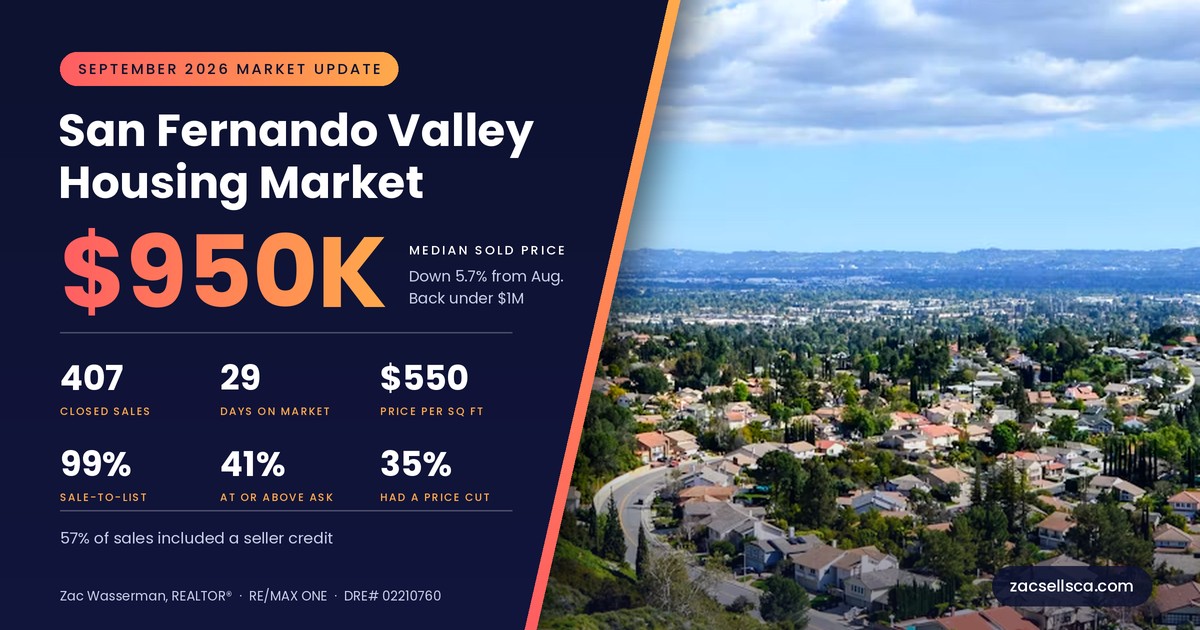
SEPTEMBER 2026 · MARKET UPDATE San Fernando Valley Housing Market Update: September 2026 Prices, Trends & City-by-City Data The median...
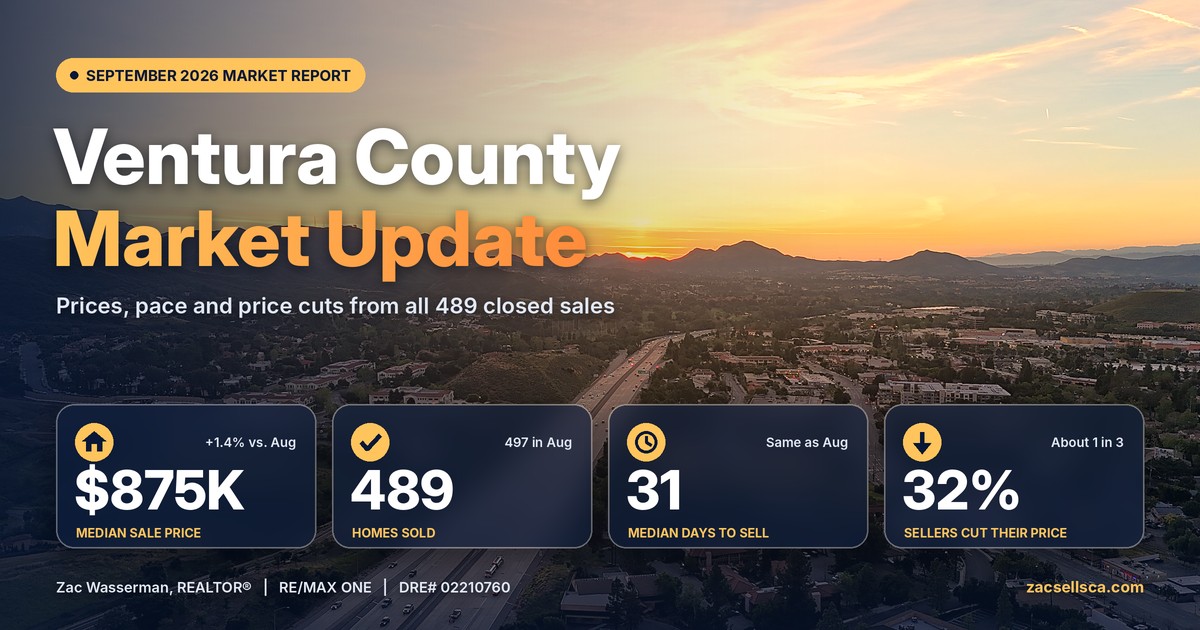
Ventura County’s September 2026 housing market: $875K median price, 489 closed sales, 31 days on market, and city-by-city data for...

State Farm filed to start writing new California home policies again, but only for homes with an IBHS Wildfire Prepared...
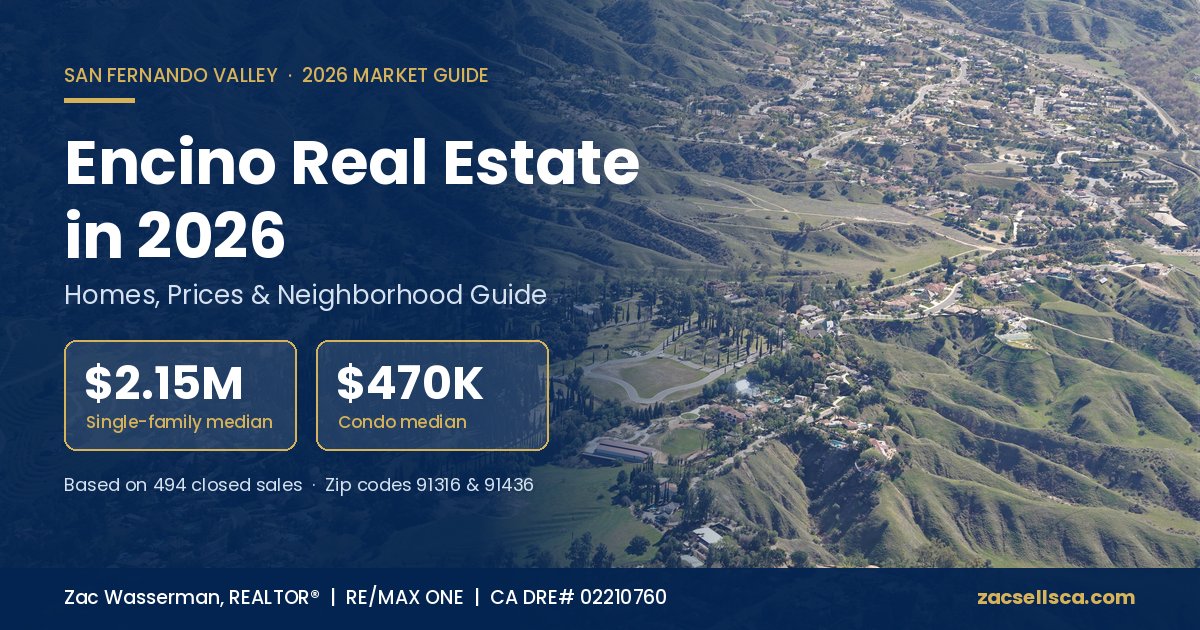
Encino real estate in 2026: see median home and condo prices, 494 closed sales, 91436 vs. 91316 trends, neighborhood insights,...