
How Much House Can I Afford in Ventura County? (2026 Guide + Payment Examples)
A practical, numbers-first way to decide your comfort zone using lender ratios, real payment breakdowns, and Ventura County ownership costs—before you fall in love with a home.

Context note: why affordability comes before shopping
Before tours, open houses, and scrolling listings at midnight, your best move is to build a clean payment target you can defend. In other words, the “right” budget is the one that survives real life—car payments, student loans, childcare, rising insurance costs, and the normal surprises that show up after closing.
Start with the CFPB’s homebuyer tools and budgeting guidance at
consumerfinance.gov/owning-a-home,
then layer in a lender education resource like Freddie Mac CreditSmart Homebuyer U at
creditsmart.freddiemac.com.
After that, use this post to translate ratios into Ventura County numbers and realistic payment examples.
If you’re asking how much house can I afford, you’re already doing the smartest part of the process: planning before emotions take over. Also, if you’re asking how much house can I afford in Ventura County specifically, timing matters because prices, insurance, and HOA dues can shift the monthly payment more than people expect. This 2026 guide is for buyers who want a practical framework—DTI ratios, payment math, and Ventura County cost assumptions—so you can shop with confidence instead of guessing.
How Much House Can I Afford? The 28/36 Rule Explained (2026 Standards)
First, lenders typically look at two ratios that act like guardrails: the front-end ratio and the back-end ratio. The front-end ratio is the share of your gross monthly income that goes toward housing costs—often guided around 28%. In practice, that housing number is the full PITI stack: principal + interest + property taxes + homeowner’s insurance, plus HOA dues if the home has them. The back-end ratio is the share of gross monthly income that goes toward all required monthly debts—commonly guided around 36% for conventional underwriting. That back-end bucket includes the housing payment plus car loans, student loans, credit card minimum payments, personal loans, and court-ordered support.
Next, these ratios are guidelines rather than hard limits. Some programs can allow a higher back-end ratio—FHA and VA can run higher in certain borrower scenarios, and lenders also apply “overlays” based on credit score, reserves, and overall risk. Even so, ratios matter because they’re a fast, standardized way to test whether a payment remains manageable under underwriting. For example, $100,000 annual income is $8,333/month gross. At 28%, the “max housing” target is about $2,333/month. At 36%, the “max total debt” target is about $3,000/month—so if you have a $400 car payment and a $250 student loan, your housing target shrinks if you want to stay under the back-end guideline.
Then, remember the lender uses gross income (before taxes), not your net paycheck. That’s why “I can afford it on paper” can still feel tight in real life—because take-home pay has to cover utilities, groceries, gas, childcare, and savings goals that do not appear in DTI. Additionally, lenders look for stability: steady income history, manageable credit obligations, and enough assets to show you can handle repairs or short-term disruptions. Importantly, “affordable” is not only about getting approved; it’s about keeping flexibility after you move in.
Moreover, DTI is the lever that quietly controls your buying power. If your credit card minimums rise, your car payment is high, or you carry large student loan obligations, your back-end ratio can cap your maximum payment even when your income looks strong. Conversely, if you reduce recurring debt, your housing allowance can increase without changing your salary. In many cases, buyers with the same income qualify for very different price ranges because one has a $900/month car + loans and the other has $150/month in minimum debt.
Likewise, DTI helps you separate the maximum you can afford from the maximum you should afford. The comfort-zone approach is simple: choose a housing payment that still lets you save monthly, cover maintenance, and handle an insurance increase without panic. For many buyers, that means targeting a front-end number under 28% even if the lender would approve higher—especially in a higher-cost area where property taxes and insurance can move over time. If you want a deeper explainer of what lenders count in DTI, the CFPB has a clear overview you can reference here: CFPB debt-to-income ratio explainer.
Finally, treat the 28/36 rule as the start of your planning conversation, not the end. You’ll use it to build a first draft budget, then refine it with Ventura County costs, loan program rules, and your personal comfort zone. If you also want to compare affordability against current market conditions, keep a market-update tab open while you plan: Ventura County real estate market updates and, if you’re cross-shopping areas, also review San Fernando Valley market updates.
Payment Examples: How Much House Can I Afford at Different Income Levels?
First, payment examples help you translate ratios into reality. In Ventura County, where the median home price is commonly discussed around ~$850,000 (market conditions vary by city, neighborhood, and property type), most buyers need a clear plan for what payment fits their lifestyle—not just what the bank will approve. Next, the table below uses the 28% front-end guideline to estimate a “max housing payment,” then maps that payment to a rough “max price estimate” using the assumptions you provided: 10% down and a 7% interest rate. After that, each row breaks out a realistic monthly stack (P&I + taxes + insurance + HOA) so you can see how non-mortgage items influence your range. Importantly, these are planning numbers, not a quote; actual pricing and payments depend on rate, taxes, insurance, HOA, and credit factors.
| Annual income | Gross monthly | Max housing (28%) | Estimated max price* | P&I | Tax | Insurance | HOA | Total |
|---|---|---|---|---|---|---|---|---|
| $80,000 | $6,667 | $1,867 | ~$425,000 | $1,200 | $390 | $170 | $100 | $1,860 |
| $100,000 | $8,333 | $2,333 | ~$550,000 | $1,600 | $505 | $200 | $0 | $2,305 |
| $120,000 | $10,000 | $2,800 | ~$650,000 | $1,900 | $595 | $220 | $80 | $2,795 |
| $150,000 | $12,500 | $3,500 | ~$825,000 | $2,400 | $755 | $250 | $90 | $3,495 |
| $200,000 | $16,667 | $4,667 | ~$1,100,000 | $3,200 | $1,010 | $300 | $150 | $4,660 |
Callout: don’t confuse payment comfort with “approved”
First, a lender’s maximum is an underwriting ceiling—not a lifestyle recommendation. Next, the “right” target payment is the one that still lets you save monthly, handle a repair, and keep your life moving. Then, if you’re trying to decide where to land, set two numbers: a “comfort payment” you’d love, and a “stretch payment” you could manage for a short window if needed. After that, shop primarily at the comfort payment and use the stretch number only when the home is truly special. Importantly, this is how you avoid the emotional whiplash of touring $900k homes when your long-term plan is a $650k payment.
Also, treat these examples like a budget planning session: they’re a starting map, not the final GPS. When rates move, your price range can shift quickly. When HOA or insurance increases, your max price can change even if your income stays the same. Additionally, you’ll want to layer in other “real life” expenses that DTI ignores—utilities, maintenance, commuting, and savings goals—so your budget doesn’t feel tight. If you want to pressure-test the numbers with closing costs and cash-to-close planning, review: closing costs 2026 examples (Ventura vs LA). If your target price crosses into jumbo territory, also compare guidelines and limits here: 2026 conforming & jumbo loan limits.
Finally, if you’re trying to map your payment to neighborhoods, the market context matters. In a market with more competition, buyers sometimes stretch. In a market with more inventory, buyers can hold the line. Keep your strategy anchored to data using Ventura County market updates and use your comfort payment to decide where you can shop confidently.
How Down Payment Affects How Much House You Can Afford (3% vs 10% vs 20%)
First, your down payment affects affordability in three ways: it changes the loan amount, it can change the interest rate or pricing, and it determines whether you pay mortgage insurance. Next, the common mistake is assuming down payment only changes “cash needed.” In reality, it changes the monthly stack and, therefore, your buying power. Then, the table below uses the $800,000 home example you provided at a 7% rate to compare 3% down, 10% down, and 20% down. Importantly, PMI is an estimate; actual PMI depends on credit score, down payment, and lender pricing.
| Scenario | Down payment | Loan amount | Monthly P&I | PMI | Tax (est.) | Insurance (est.) | Estimated total |
|---|---|---|---|---|---|---|---|
| 3% down | $24,000 | $776,000 | ~$5,160 | ~$390 | ~$880 | ~$170 | ~$6,600 |
| 10% down | $80,000 | $720,000 | ~$4,790 | ~$360 | ~$880 | ~$170 | ~$6,200 |
| 20% down | $160,000 | $640,000 | ~$4,255 | $0 | ~$880 | ~$170 | ~$5,440 |
Next, notice what actually changes: at 20% down, the payment drops because the loan is smaller and PMI disappears. That lower payment can either increase your comfort level or increase your buying power. Then, at 3% down, the payment stack becomes heavier—especially once you add taxes and insurance—so your DTI ceiling can cap you before the price cap does. Additionally, PMI can feel like “throwing money away,” but it can also be a bridge: it allows earlier ownership while you build equity, and conventional PMI can drop off once you reach 20% equity (by amortization or appreciation) if you meet servicer rules.
Callout: 10% down can be a sweet spot for planning
First, 10% down often balances cash-to-close with payment reality. Next, it keeps more money liquid than 20% down, which can matter if you need reserves after closing. Then, it still reduces the loan amount enough to improve the payment versus 3% down. Importantly, this doesn’t mean 10% is “best” for every buyer—some buyers want the lowest possible payment, while others want to buy sooner and keep cash on hand.
Also, down payment strategy should connect to your plan for the first 24 months. If you expect income growth, you may tolerate a slightly higher payment now. If you expect childcare expenses or a job change, you may prefer a safer comfort number. Additionally, don’t forget the “cash after close” question: emergency fund and reserves. If you want to combine down payment planning with a neighborhood-by-neighborhood approach, start with market context here: Ventura County market updates.
How Much House Can I Afford in Ventura County? Property Tax, Insurance & HOA Costs
First, Ventura County ownership costs can move your monthly payment meaningfully, even if your mortgage rate stays the same. Next, property taxes in many areas often land around ~1.0%–1.1% of assessed value annually (your specific rate depends on the tax area, bonds, and assessments). On an $800,000 home, that’s roughly $8,000–$8,800 per year, or about $667–$733 per month, and some buyer plans budget closer to ~$880/month using the high-end planning number when additional assessments apply. Then, homeowner’s insurance has become more variable in California; a planning range of $1,500–$3,000+ per year ($125–$250+/month) is common depending on property features and wildfire exposure. Additionally, HOA dues can be $0 for many single-family homes, but condos and townhomes can run $200–$600/month depending on amenities and reserves.
Next, these “non-mortgage” line items matter because lenders include them in housing cost for DTI. That means two homes at the same price can have very different affordability if one has a large HOA or higher insurance. Then, buyers are sometimes surprised by maintenance budgeting: a common rule of thumb is 1%–2% of home value annually for maintenance and replacements, which would be $8,000–$16,000/year on an $800,000 home. Importantly, maintenance is not in DTI, but it is in real life—so ignoring it can turn a “safe” payment into a stressful one.
Also, utilities are not counted in DTI, yet they should be planned. Many buyers budget $200–$400/month as a starting point, depending on home size, insulation, and usage. Additionally, if you’re shopping condos or planned communities, ask about HOA reserves, recent special assessments, and insurance coverage. If you’re planning for insurance scenarios, review the local California insurance landscape here: Home Insurance 2026 guide (FAIR Plan + DIC) and, if flood zones may be in play, also review: Flood Insurance 2026 guide (FEMA maps).
Finally, the practical takeaway is simple: run affordability on the full stack (P&I + taxes + insurance + HOA), not just the mortgage. If you want to keep your shopping disciplined, build your maximum "all-in" payment first, then back into price. That's the cleanest way to decide how much house can I afford in Ventura County when two neighborhoods can have different tax areas and insurance dynamics.
How to Calculate Your Debt-to-Income Ratio (Step-by-Step)
First, DTI is calculated using your gross monthly income and your required monthly debt payments. Next, you add up all monthly debts that appear on credit or are legally required. Then, you divide that total by your gross monthly income. Finally, you convert the result into a percentage.
What counts as debt (and what doesn’t)
- Mortgage payment (PITI + HOA)
- Car loans/leases
- Student loans (minimum payment)
- Credit card minimum payments
- Personal loans
- Child support/alimony
- Utilities (gas, electric, water, trash)
- Cell phone
- Groceries
- Gas/transportation
- Entertainment
- Auto/health/life insurance
Example DTI calculation (real numbers)
Gross monthly income: $10,000
Proposed housing: $2,500
Car payment: $400
Student loan: $250
Credit card minimums: $100
Total monthly debt: $3,250
DTI: $3,250 ÷ $10,000 = 32.5% ✓ (under 36%)
Next, once you've calculated DTI and you know how much house can I afford, you can set a realistic housing range and shop with confidence. If you want to turn this into a “price range” estimate with closing costs and cash-to-close planning, review: closing costs examples for 2026. If you want to ensure your target loan amount fits current lending tiers, reference: conforming vs jumbo loan limits.
If You're Buying: How Much House Can I Afford Checklist (Before You Shop)
First, calculate your DTI before viewing homes
If you know your front-end and back-end targets, you’ll shop with discipline. Build your all-in housing payment (PITI + HOA), then check your total debt number.
Next, get pre-approved early (not just pre-qualified)
Pre-qualification is an informal estimate based on what you tell a lender. Pre-approval is a deeper review (income, credit, assets) and carries more weight with sellers.
Then, factor in ALL costs—not only the mortgage
Taxes, insurance, HOA, maintenance, and utilities can shift affordability meaningfully. Use the Ventura County budgeting section above as your baseline.
Also, keep your emergency fund separate from down payment
Cash-to-close is not the same as “cash-to-live.” Plan reserves for repairs, deductible surprises, and life events.
Finally, align your budget with market conditions
In a competitive market, buyers sometimes stretch. In a balanced market, you can hold the line. Track trends here: Ventura County market updates.
Importantly, the point of this checklist is to keep you emotionally protected: you choose the payment first, then you choose the homes. That’s the cleanest way to decide how much house can I afford without letting the market decide for you.
5 Affordability Mistakes Buyers Make (And How to Avoid Them)
How Much House Can I Afford? Don't Max Out Your Pre-Approval
Just because a lender approves a payment doesn’t mean it matches your lifestyle goals. Build a comfort payment that still leaves breathing room.
- Shopping by price instead of payment
- Ignoring HOA, insurance, and taxes until escrow
- Using net income instead of gross for ratio planning
- Keeping high monthly debts (car, cards) while trying to stretch price
- Emptying reserves to hit a down payment target
- Set an all-in payment cap, then back into price
- Model PITI + HOA up front using conservative assumptions
- Plan using gross income (lender standard), then apply comfort-zone logic
- Reduce recurring debt to expand buying power safely
- Separate down payment from emergency reserves
How Loan Programs Change How Much House You Can Afford (FHA, Conventional, VA)
First, loan programs change affordability by altering down payment requirements, mortgage insurance rules, and fees. Next, even if two loans finance the same price, the monthly stack can differ because FHA mortgage insurance behaves differently than conventional PMI, and VA uses a funding fee but avoids monthly PMI. Then, the key is to compare programs based on all-in payment and cash-to-close—not just the interest rate headline.
FHA
- 3.5% down minimum
- Upfront MIP (1.75% of loan)
- Monthly MIP (doesn’t drop off automatically)
- More lenient credit/DTI in many cases
- Often useful for first-time buyers
Conventional
- 3% down minimum (primary residence)
- PMI typically drops at 20% equity
- Better pricing with strong credit + more down
- Stricter credit standards than FHA
- Flexible term and structure options
VA (eligible veterans)
- 0% down option
- Funding fee (varies; may be waived for disabled vets)
- No monthly PMI
- Competitive rates in many scenarios
- Powerful affordability tool when eligible
Next, program choice can also change how lenders view DTI. Some programs tolerate higher back-end ratios with compensating factors like reserves, strong credit, and stable income. Then, your program choice should match your goals: lowest payment, lowest cash-to-close, fastest path to ownership, or maximum long-term flexibility. If you’re also comparing loan size tiers (conforming vs jumbo) as your budget increases, reference: 2026 loan limits for Ventura + LA.
Finally, if you’re deciding between a lower down payment now versus waiting to save more, compare your "ownership cost" against rent plus savings—then make a decision based on stability and comfort. This is another way to approach how much house can I afford without forcing a one-size-fits-all rule.
FAQ: How Much House Can I Afford, DTI Ratios & Payment Planning
First, should I use a home affordability calculator or a mortgage payment calculator?
Next, what’s the difference between pre-qualification and pre-approval?
Then, do utilities count in my debt-to-income ratio?
Also, can I go above 36% back-end DTI?
Moreover, is it better to put 20% down or keep cash reserves?
Likewise, how do HOA fees affect affordability?
Finally, what’s the fastest way to improve affordability without earning more?
- All Posts
- Buyer Guides
- California Home Insurance & Wildfire Risk
- Home Financing (Mortgage & Loan Guides)
- Market Updates & Forecasts
- Seller Guides
- Back
- Ventura County Real Estate Market Updates
- San Fernando Valley Real Estate Market Updates (Monthly): Prices, Inventory & Trends
Ventura County Mortgage Rates October 2026 October 2026 Mortgage Market Update Ventura County Mortgage Rates October 2026: 7.4% and What...

Ventura County Home Seller Guide | Fall / Winter 2026 Should You Sell Now or Wait Until Spring? Ventura County...

SEPTEMBER 2026 · MARKET UPDATE San Fernando Valley Housing Market Update: September 2026 Prices, Trends & City-by-City Data The median...
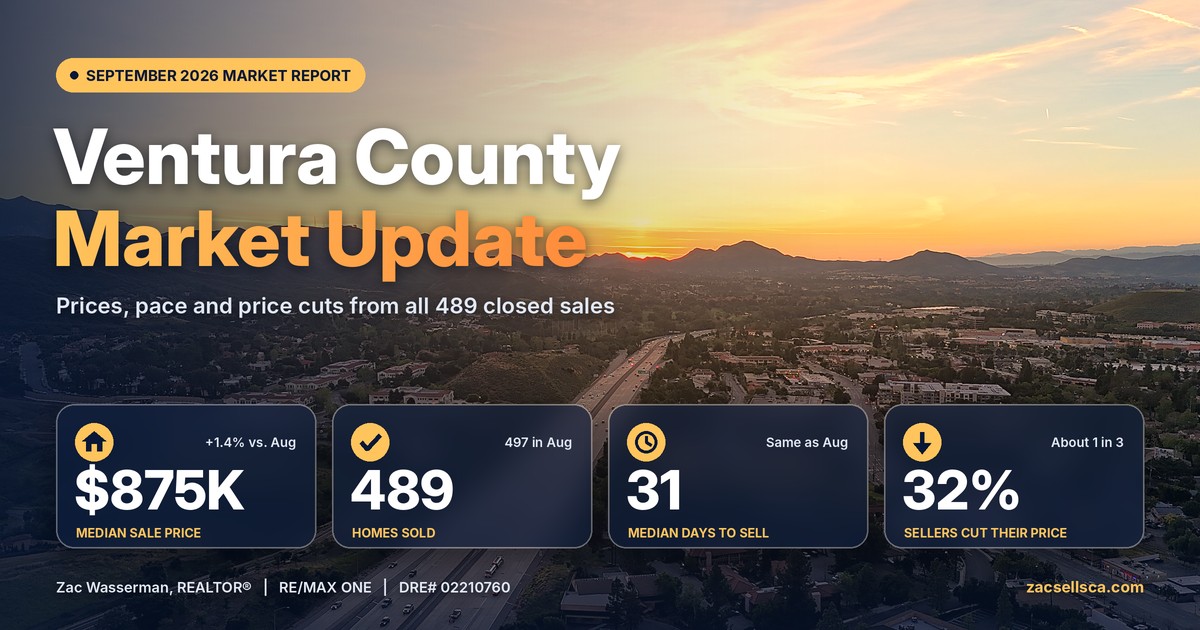
Ventura County’s September 2026 housing market: $875K median price, 489 closed sales, 31 days on market, and city-by-city data for...

State Farm filed to start writing new California home policies again, but only for homes with an IBHS Wildfire Prepared...

Encino real estate in 2026: see median home and condo prices, 494 closed sales, 91436 vs. 91316 trends, neighborhood insights,...