

Home Selling Mistakes Ventura County Sellers Make (And How to Avoid Them)
Selling in Ventura County can still be very rewarding in 2026 — however, only if you price, prepare, and market your home the right way from the start. The mistakes below are the ones that most often cost sellers time, leverage, and money.
Why This Matters for Ventura County Sellers in 2026
If you're planning to sell your home in Ventura County in 2026, you're entering one of the most nuanced real estate markets in California. Prices remain elevated, but buyers are more selective than they were two or three years ago. Days on market are creeping back up. And the sellers who are struggling right now often have one thing in common: they made one or more of the avoidable home selling mistakes Ventura County agents see every single listing cycle.
I'm Zac Wasserman, a licensed REALTOR® with RE/MAX ONE serving Ventura County and the San Fernando Valley. In this guide, I'm walking you through the seven most common and costly mistakes home sellers make in this market — and, more importantly, exactly how to avoid them.
Whether you're listing in Camarillo, Thousand Oaks, Oxnard, Simi Valley, or anywhere in between, these lessons apply directly to your situation.
Why Selling a Home in Ventura County Is Trickier Than It Looks
On the surface, Ventura County looks like a seller-friendly market. Median home prices have held strong — hovering in the upper $800,000s to low $900,000s depending on city and property type. Inventory remains below historical norms. And demand from LA County buyers relocating north continues to support prices.
However, beneath those headline numbers, the market has quietly shifted. Buyers have more choices than they did at the peak of the frenzy. Interest rates in the mid-6% to 7% range have reduced purchasing power significantly. As a result, homes that aren't priced, presented, and marketed properly are sitting — sometimes for 45, 60, or even 90-plus days.
Understanding the current Ventura County housing market Q1 2026 conditions is essential before you list. Additionally, working with an agent who understands the hyperlocal dynamics between, say, central Ventura versus east Thousand Oaks versus the Conejo Valley corridor can make a meaningful difference in your outcome.
Home Selling Mistakes Ventura County Sellers Make: Overpricing First
This is, without question, the single most common and most damaging home selling mistakes Ventura County issue — and in California broadly.
Sellers often anchor to what their neighbor got in 2022, or to the Zestimate they saw six months ago, or to the number they "need" to make the move work financially. Unfortunately, none of those figures are what today's buyer is willing to pay.
If you're wondering why your house isn't selling in Ventura County, an overpricing problem at launch is the first thing I look at when sellers come to me after a stale listing.
Skipping Pre-Sale Repairs and Staging
Many sellers operate under the assumption that buyers will "see past" cosmetic issues or deferred maintenance. In a frenzied seller's market, that's sometimes true. In today's market, it is not.
Buyers in Ventura County are making significant financial commitments — often $700,000 to $1,000,000 or more. They are scrutinizing every detail. A dripping faucet, a cracked tile, peeling paint on the exterior trim, or a garage door that sticks will absolutely be used to negotiate a lower price — or as a reason to walk away entirely.
Choosing the Wrong Listing Agent (Or Going FSBO)
Choosing your listing agent based on who charges the lowest commission, or who gives you the highest suggested list price, is one of the most expensive mistakes a seller can make in Ventura County real estate.
Similarly, attempting a for-sale-by-owner (FSBO) transaction to save on commission almost always results in a lower net sale price — studies from NAR's Profile of Home Buyers and Sellers consistently show FSBO homes sell for significantly less than agent-represented homes, even after factoring in commission savings.
Poor Listing Photos and Weak Online Presentation
More than 95% of buyers begin their home search online. Your listing photos aren't a nice-to-have — they are your home's first showing. And in many cases, they determine whether a buyer schedules an in-person visit or scrolls past entirely.
Being Inflexible on Showings
This one surprises sellers when I bring it up, but it's more common than you'd think. A seller who requires 48-hour notice for all showings, or who refuses weekend showings, or who limits showing windows to narrow time slots is dramatically reducing their pool of potential buyers.
Letting Emotion Drive Negotiation Decisions
Your home has years of memories, sweat equity, and personal meaning attached to it. That's completely understandable. However, the moment an offer comes in, you need to shift from homeowner to business negotiator — and that's genuinely difficult to do without experienced representation.
Common emotional mistakes include: rejecting a reasonable offer because the price felt insulting, refusing to negotiate on inspection repair requests out of pride, or accepting a lower offer from a buyer "you just liked better" without running a proper net proceeds comparison.
Ignoring Closing Costs and Net Proceeds Math
Many sellers focus entirely on their list price and lose sight of what they'll actually walk away with after closing. This leads to unpleasant surprises at the settlement table — and in some cases, to sellers rejecting offers they should have accepted.
In California, sellers typically carry: the listing agent commission, the buyer's agent commission (terms vary post-NAR settlement), county and city transfer taxes, escrow fees, title insurance, prorated property taxes, and any negotiated buyer credits for repairs or closing costs.
What Ventura County Sellers Should Do Instead
If you're thinking about listing your home, the first step is understanding what it's actually worth in today's market. Request a free home valuation, and I'll put together a detailed analysis of your home's current market position — no obligation, no pressure.
Home Selling Mistakes Ventura County: FAQ
What is the biggest mistake home sellers make in Ventura County?
Overpricing is consistently the most damaging mistake. Homes that launch too high miss the critical first-two-weeks window, accumulate market stigma, and often ultimately sell for less than they would have if priced correctly from day one.
Should I stage my home before selling in Ventura County?
Yes. Staged homes in Ventura County sell faster and closer to their list price than unstaged homes. Even light staging — decluttering, rearranging furniture, and adding a few updated accessories — makes a measurable difference in how buyers perceive the property online and in person.
How do I avoid overpricing my Ventura County home?
Work with a local REALTOR® to run a comparative market analysis (CMA) using recent closed sales — not Zestimates, not what your neighbor "heard" their home was worth. Price based on what similar homes have actually sold for in the past 60–90 days, adjusted for condition and features.
Is FSBO a good idea in Ventura County?
Generally, no. Data from NAR shows FSBO homes consistently sell for less than agent-represented homes, even after accounting for commission savings. In a complex market like Ventura County — where hyperlocal conditions, disclosure requirements, and negotiation strategy matter — professional representation pays for itself.
How long does it take to sell a home in Ventura County right now?
In Q1 2026, the median days on market in Ventura County was approximately 35 days for correctly priced, well-presented homes. However, homes that are overpriced or poorly prepared are sitting significantly longer — sometimes 60 to 90+ days — which puts sellers in a weaker negotiating position.
What should I do first when preparing to sell my Ventura County home?
Start with a free home valuation from a local agent to establish an accurate market position. Then get a pre-inspection so you know what repair items you'll need to address before listing. From there, focus on pre-sale presentation — declutter, deep clean, and consult with your agent on whether professional staging makes sense for your property.
Thinking About Your Next Move Too?
If your sale is tied to a purchase, planning both sides together can reduce stress and improve your timing. In addition, my step-by-step home buying guide Ventura County buyers use can help you understand the purchase side before your current home hits the market.
Ready to sell your Ventura County home the right way?
Avoid the mistakes that cost sellers time, money, and stress — and work with a local expert who knows this market inside and out. Consequently, reaching out before you list can help you avoid the preventable missteps that weaken your leverage from day one.
- All Posts
- Buyer Guides
- California Home Insurance & Wildfire Risk
- Home Financing (Mortgage & Loan Guides)
- Market Updates & Forecasts
- Seller Guides
- Back
- Ventura County Real Estate Market Updates
- San Fernando Valley Real Estate Market Updates (Monthly): Prices, Inventory & Trends

Ventura County Mortgage Rates October 2026 October 2026 Mortgage Market Update Ventura County Mortgage Rates October 2026: 7.4% and What...

Ventura County Home Seller Guide | Fall / Winter 2026 Should You Sell Now or Wait Until Spring? Ventura County...

SEPTEMBER 2026 · MARKET UPDATE San Fernando Valley Housing Market Update: September 2026 Prices, Trends & City-by-City Data The median...
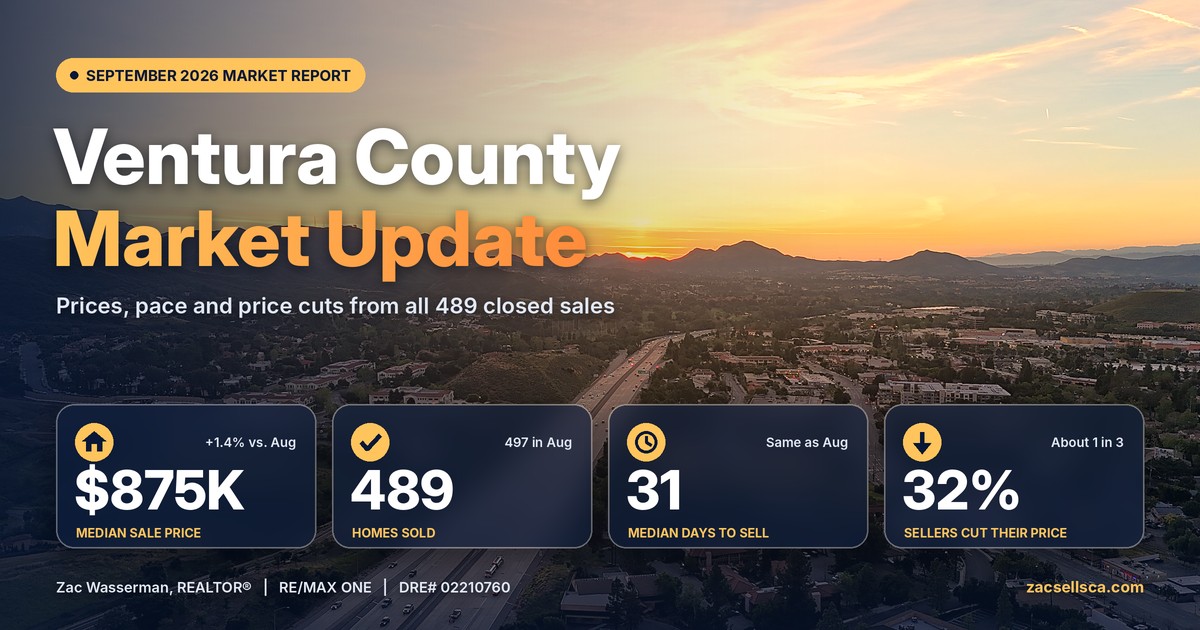
Ventura County’s September 2026 housing market: $875K median price, 489 closed sales, 31 days on market, and city-by-city data for...

State Farm filed to start writing new California home policies again, but only for homes with an IBHS Wildfire Prepared...

Encino real estate in 2026: see median home and condo prices, 494 closed sales, 91436 vs. 91316 trends, neighborhood insights,...