

Foreclosures in Ventura County 2026: What Buyers Need to Know Right Now
Foreclosure opportunities still exist, but the process, financing requirements and risks look very different from the distressed market buyers remember from 2008.
Quick Answer
Foreclosure activity in Ventura County remains historically low in 2026. Buyers are more likely to encounter a small number of pre-foreclosures, trustee sales and bank-owned homes than a broad wave of deeply discounted listings. REO properties usually offer the most accessible path for traditional buyers because they may allow inspections and standard financing.
If you've been searching "foreclosures in Ventura County 2026," you're probably picturing one of two things: either a hidden stash of steeply discounted homes waiting to be scooped up, or a warning sign that the local market is about to crack. The truth, as usual, sits somewhere in between. Foreclosures still happen in Ventura County, but they look nothing like they did during the 2008 crash — and understanding how they actually work today will save you time, money, and a few uncomfortable surprises.
As your local REALTOR®, I get asked about foreclosures more often than you'd expect, especially from buyers who feel priced out of the traditional market and are hoping a distressed sale might be their way in. This guide walks through what's really happening with foreclosures in Ventura County in 2026, how the process works under California law, where to actually find these listings, and what you need to know before you make an offer.
Market Reality
What's Actually Happening with Foreclosures in Ventura County in 2026?
First, the reassuring news: foreclosure activity in Ventura County remains historically low. However, it isn't zero, and it has ticked up slightly compared to the ultra-low levels of the past few years. Rising insurance costs, elevated mortgage rates on adjustable-rate loans that reset, and pockets of job disruption have pushed a small but real number of homeowners into default.
Nationally, ATTOM Data Solutions tracks foreclosure filings and consistently shows Ventura County well below national averages for foreclosure rates. Therefore, if you're expecting a flood of bank-owned listings similar to 2009–2012, you'll be disappointed. What you're more likely to find in 2026 is a scattering of pre-foreclosure homes, the occasional trustee sale, and a handful of REO (real estate owned) properties — not entire neighborhoods full of them.
That said, the fact that inventory is this thin actually works in a foreclosure buyer's favor in one specific way: less competition from other investors chasing a shrinking pool of deals. As a result, buyers who understand the process well have a real edge over those simply refreshing Zillow and hoping.
California Foreclosure Process
The Three Stages of Foreclosure in California (And What Each Means for You)
California foreclosures move through three distinct stages, and each one represents a completely different buying opportunity — and risk level.
Pre-foreclosure
Notice of Default
This is the earliest stage, when a homeowner has fallen behind on payments and the lender has filed a Notice of Default. At this point, the home hasn't been repossessed. Consequently, buyers can sometimes negotiate directly with the homeowner in what's called a short sale, though the lender must approve the final price. The entire notice and cure period is governed by the California Civil Code trustee sale process, which gives homeowners a set window to catch up before the sale can proceed. This stage offers the most negotiating room, but also the most paperwork and patience.
Trustee Sale
Public Auction
If the homeowner doesn't cure the default, the property moves to a public trustee sale, often held at the county courthouse steps or online. Buyers typically must pay in full, in cash, on the spot — no financing, no inspection, no guarantees about liens or occupants. This stage carries the highest risk and is generally best left to experienced investors.
REO
Bank-Owned Property
If nobody buys the home at auction, it reverts to the lender and becomes an REO property. These are the foreclosures most first-time buyers picture: listed with a real estate agent, eligible for standard financing, and sold "as-is" but through a normal escrow process. Additionally, REO homes usually allow inspections, which removes much of the blind-bidding risk from the earlier stages.
Why the stage matters: Understanding which stage a property is in changes everything about how you should approach it — from financing to timeline to how much risk you're actually taking on.
Finding Distressed Properties
Where to Find Foreclosure Listings in Ventura County
Foreclosure listings don't always show up on the same sites as traditional homes, which is one reason buyers feel like this information is hard to access. Here's where they actually surface:
In practice, working with an agent who actively tracks Ventura County housing market 2026 data and monitors new filings is far more efficient than trying to piece this together yourself across four different sources.
Looking for Actual Opportunities?
Get help separating a legitimate foreclosure opportunity from an expensive problem.
Zac can help you compare distressed properties against standard Ventura County listings, review the stage of foreclosure and build a realistic purchase strategy.
Benefits and Tradeoffs
Pros and Cons of Buying a Foreclosed Home in Ventura County
Weighing the pros and cons of foreclosures in Ventura County 2026 comes down to how much risk you're willing to take on in exchange for potential savings.
Potential Advantages
- Potential to buy below comparable market value, particularly at the REO stage
- Less bidding competition than a typical listing in this low-inventory market
- Motivated sellers (lenders) who often want a fast, clean close
Potential Drawbacks
- "As-is" condition, sometimes with deferred maintenance or damage
- Longer closing timelines with bank-owned sellers navigating their own internal approval process
- Auction-stage purchases carry title and occupancy risk that traditional buyers rarely encounter
- Fewer available comparable sales, which can complicate financing appraisals
In short, the discount is real, but so is the added complexity. If you're weighing whether now is even the right time to buy at all, it's worth reading our broader look at whether you should wait to buy a house in 2026 before narrowing in on foreclosures specifically.
Due Diligence Checklist
What to Know Before You Bid on a Ventura County Foreclosure
Before you get attached to a listing, walk through these essentials:
Get a title report early.
Liens, unpaid HOA dues, and back taxes can transfer with the property, especially at auction. A preliminary title report protects you from inheriting someone else's debt.
Budget for repairs you can't inspect yet.
REO and short sale properties can typically be inspected; auction properties usually cannot. Build a repair cushion into your offer accordingly.
Confirm occupancy status.
Some foreclosed homes still have occupants, and removing them is a legal process that takes time and money.
Move fast, but don't skip due diligence.
Foreclosure sellers want speed. However, rushing past title, inspection, or financing checkpoints is exactly how buyers get burned.
Compare against traditional listings first.
Sometimes a well-priced standard listing beats a "discounted" foreclosure once repair costs and delays are factored in.
Loans and Cash Requirements
How Financing Works When You're Buying a Foreclosure
This is where most buyer confusion happens. Financing for foreclosures in Ventura County 2026 depends entirely on which stage the property is in.
REO Properties
REO properties generally qualify for conventional, FHA, or VA financing just like any other home — lenders treat them as a normal purchase once they're bank-owned and listed on the MLS. If you haven't already, it's worth understanding how much house can I afford in Ventura County before you start touring foreclosure listings, since the pre-approval process is identical to a traditional purchase.
Trustee Sale Auctions
Trustee sale auctions are a different story entirely. These almost always require cash, paid in full, at the time of sale — no loan contingency, no appraisal, no financing period. As a result, auction purchases are realistically limited to buyers with significant liquid capital or investors using hard money loans.
Pre-Foreclosure Short Sales
Pre-foreclosure short sales sit in between: standard financing is usually possible, but timelines stretch longer because the lender must approve the sale price, which can take weeks or months longer than a typical escrow.
Local Buyer Guidance
Ready to Explore Foreclosure Opportunities in Ventura County?
Foreclosures in Ventura County in 2026 aren't the flood of bargain-basement deals some buyers expect, but for the right person, at the right stage of the process, they can still represent real opportunity. The key is knowing which stage you're looking at, what financing is actually available, and what risks you're taking on before you get emotionally attached to a "deal."
If you're a first-time buyer exploring your options, our first-time homebuyer guide for Ventura County is a great next stop before diving into distressed properties specifically.
Ready to talk through whether a foreclosure purchase makes sense for your situation? Contact Zac Wasserman at RE/MAX ONE — your local Ventura County expert — and let's find the right path forward together.
Common Buyer Questions
Frequently Asked Questions About Ventura County Foreclosures in 2026
Zac Wasserman, REALTOR®
RE/MAX ONE · CA DRE# 02210760
Helping buyers and sellers throughout Ventura County and the San Fernando Valley make informed real estate decisions with clear local data and practical guidance.
- All Posts
- Buyer Guides
- California Home Insurance & Wildfire Risk
- Home Financing (Mortgage & Loan Guides)
- Market Updates & Forecasts
- Seller Guides
- Back
- Ventura County Real Estate Market Updates
- San Fernando Valley Real Estate Market Updates (Monthly): Prices, Inventory & Trends

Ventura County Mortgage Rates October 2026 October 2026 Mortgage Market Update Ventura County Mortgage Rates October 2026: 7.4% and What...
Ventura County Home Seller Guide | Fall / Winter 2026 Should You Sell Now or Wait Until Spring? Ventura County...
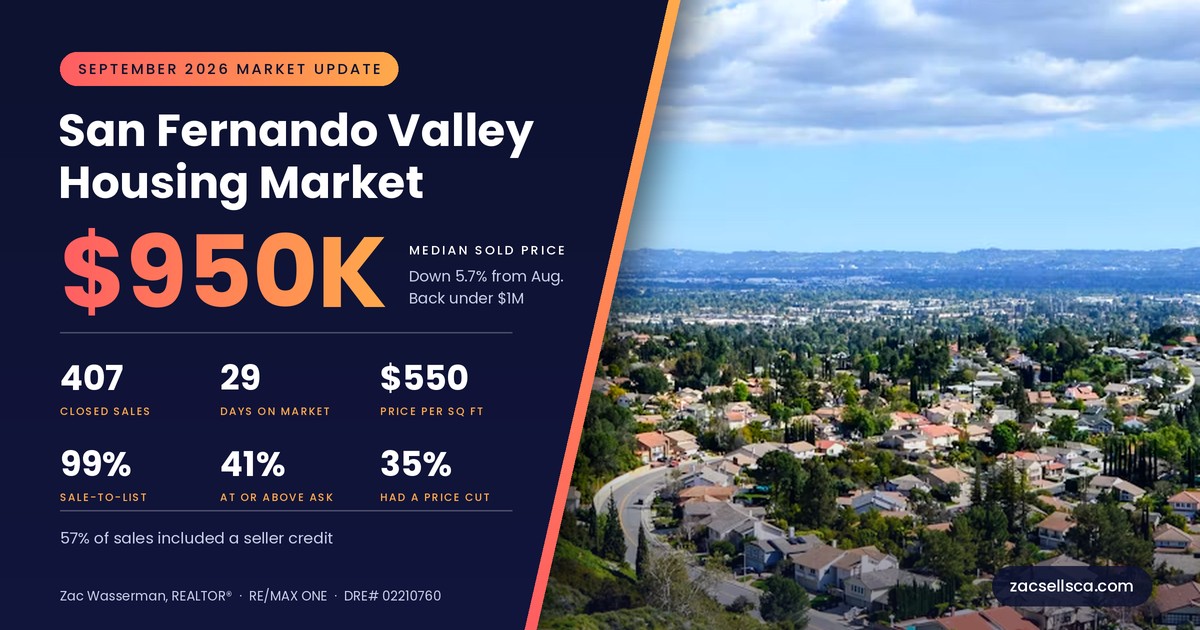
SEPTEMBER 2026 · MARKET UPDATE San Fernando Valley Housing Market Update: September 2026 Prices, Trends & City-by-City Data The median...
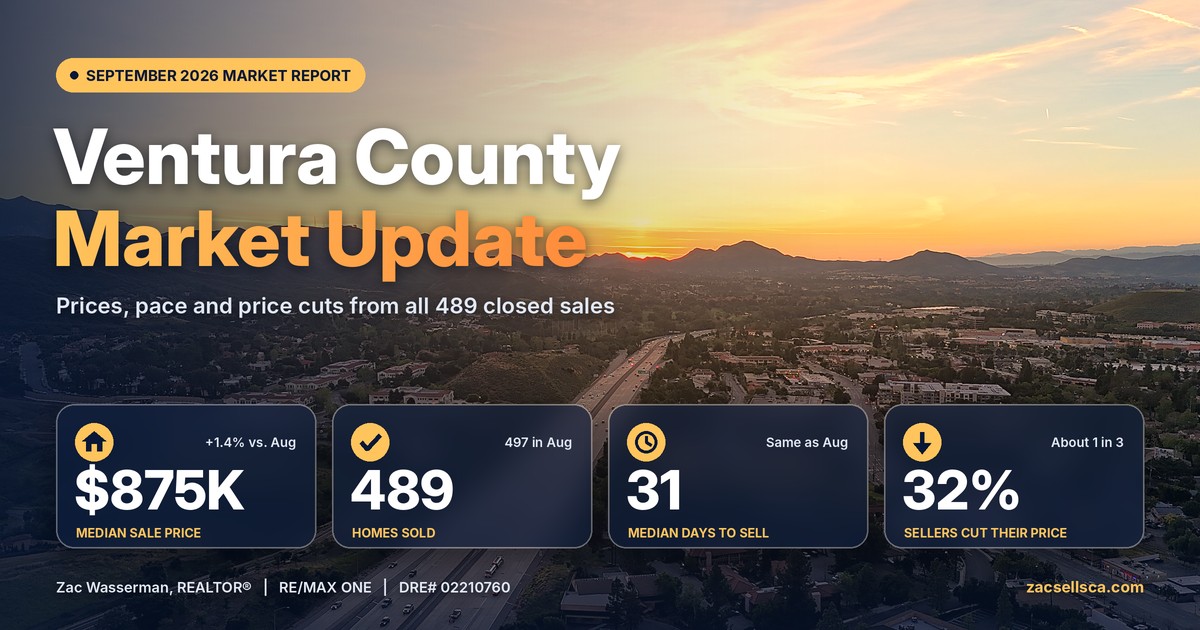
Ventura County’s September 2026 housing market: $875K median price, 489 closed sales, 31 days on market, and city-by-city data for...

State Farm filed to start writing new California home policies again, but only for homes with an IBHS Wildfire Prepared...

Encino real estate in 2026: see median home and condo prices, 494 closed sales, 91436 vs. 91316 trends, neighborhood insights,...