
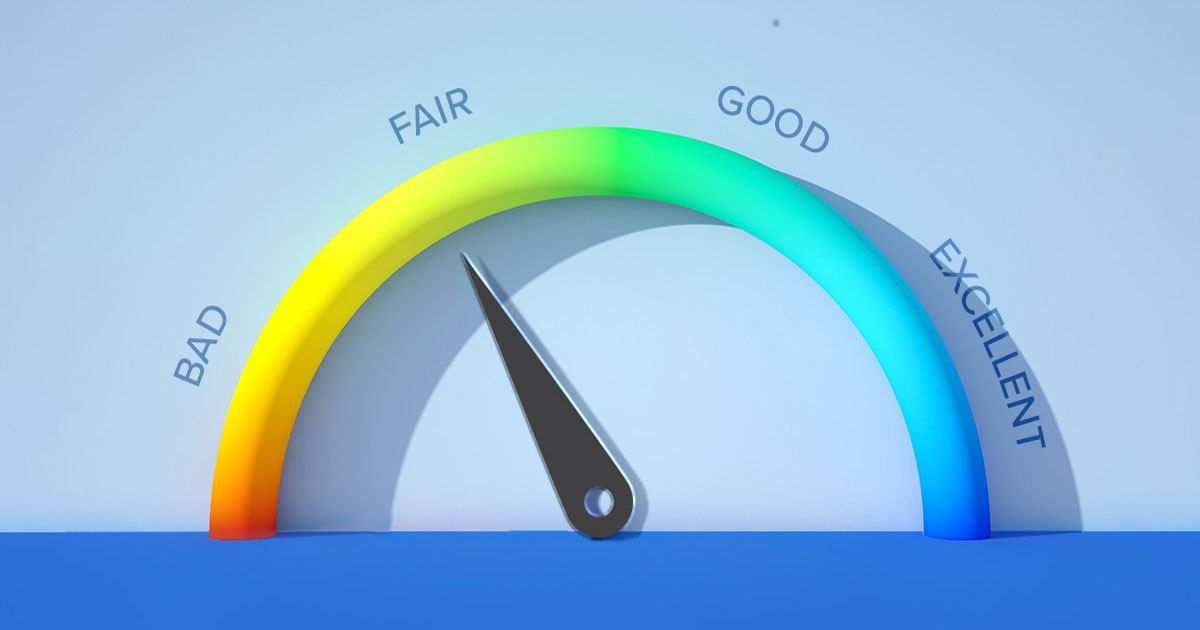
What Credit Score Do You Need to Buy a Home in Ventura County?
Minimum scores vary by loan type, but many Ventura County buyers qualify with a lower credit score than they initially expect.
If you're thinking about buying a home in Ventura County, there's a good chance one question keeps coming back to you: “Is my credit score good enough?” It's one of the most common questions I get from buyers, and understandably so — your credit score plays a direct role in whether you qualify for a mortgage, and it can significantly affect the interest rate you're offered. Fortunately, the answer isn't as intimidating as it might seem. Most buyers qualify with a lower score than they expect, and there are several loan programs specifically designed to help.
In this guide, I'll walk you through exactly what credit score you need to buy a home in Ventura County, how your score affects your monthly payment, and what to do if your score isn't quite where it needs to be yet.
What Credit Score Do You Actually Need to Buy a Home in Ventura County?
There's no single universal number. However, most lenders in Ventura County work within a fairly predictable range depending on the loan type you choose. Generally speaking, a credit score in the 620–680 range is enough to qualify for a conventional loan, while government-backed programs like FHA loans allow scores as low as 580 — and in some cases even lower with a larger down payment.
Additionally, your score doesn't just determine whether you're approved. It also determines the interest rate, monthly payment, and total cost of your loan over time. As a result, buyers with higher scores typically unlock meaningfully better terms, even if a lower score would technically still qualify them.
Therefore, determining the right credit score to buy a home in Ventura County is not simply about reaching the lowest number a lender will accept. It is also about reaching a score that gives you a manageable payment, reasonable loan costs, and enough flexibility to compete for the type of property you want.
Minimum Credit Score to Buy a Home in Ventura County by Loan Type
Here's a breakdown of typical minimum credit score requirements by loan program for Ventura County buyers:
Conventional Loan
620+A score of 620 is a common minimum, although many lenders prefer 680 or higher for more favorable pricing and interest rates.
FHA Loan
580+A score of 580 may qualify for a 3.5% down payment. Scores between 500 and 579 may be considered by some lenders with at least 10% down.
VA Loan
580–620The VA does not establish an official government minimum, but many VA-approved lenders use their own minimum score requirements.
USDA Loan
Typically 640USDA financing commonly uses a 640 benchmark, although geographic eligibility is limited in Ventura County because of rural-area requirements.
FHA requirements deserve some additional explanation. Although the federal program establishes baseline eligibility standards, individual lenders may apply stricter internal rules known as overlays. Therefore, a buyer who appears to meet the federal minimum could receive different answers from different lenders. Buyers can review the current FHA credit guidelines through the U.S. Department of Housing and Urban Development.
However, meeting a published minimum does not guarantee loan approval. Lenders also evaluate the source and stability of your income, the amount of recurring debt you carry, your available cash reserves, your down payment, and the property itself. Consequently, two buyers with the same score may receive very different loan terms.
Therefore, if your score falls anywhere in the 580–620 range, you likely still have real options — it simply means your loan program and lender selection matter more. If you haven't yet worked out your target price range, our guide on how much house can I afford in Ventura County is a good next step alongside this one.
How Your Credit Score Affects Your Mortgage Rate and Payment
This is the part buyers often underestimate. Your credit score doesn't just open or close the door to approval — it directly shapes your interest rate, which compounds significantly over a 30-year loan.
For example, a buyer with a 760+ credit score might receive a noticeably lower rate than a buyer with a 620 score on the exact same loan amount. The actual spread changes based on the lender, loan program, down payment, property type, occupancy, and overall market conditions. However, even a difference of three-quarters of a percentage point can materially affect a Ventura County buyer's payment.
Illustrative Example — Not a Live Mortgage Quote
$700,000 Loan: 620 Score Rate vs. 760+ Score Rate
Suppose two buyers each finance $700,000 with a 30-year fixed-rate mortgage. For illustration only, assume the buyer with a 620 score receives a 7.25% rate, while the buyer with a 760+ score receives a 6.50% rate. These rates are hypothetical examples and are not current quotes, advertised terms, or guarantees of available financing.
| Illustrative Scenario | Interest Rate | Monthly Principal & Interest | Total Interest Over 30 Years |
|---|---|---|---|
| Buyer with 620 score | 7.25% | Approximately $4,775 | Approximately $1,019,084 |
| Buyer with 760+ score | 6.50% | Approximately $4,424 | Approximately $892,811 |
In this example, the higher-score borrower saves approximately $351 per month and about $126,273 in total interest over 30 years. These estimates exclude property taxes, homeowners insurance, mortgage insurance, HOA dues, closing costs, and other housing expenses.
Furthermore, the lower payment may affect more than your monthly cash flow. Because lenders consider your monthly obligations when calculating your debt-to-income ratio, a lower interest rate may increase the amount you can qualify to borrow. Consequently, improving your score may expand your buying power even when your income and down payment remain unchanged.
As a result, even if you already meet the minimum credit score to buy a home in Ventura County, it may be worth taking a few months to improve your score before locking in a loan. However, waiting is not automatically the right answer. Available homes, interest rates, prices, and your own housing needs may also change, so the decision should be based on the full financial picture.
Why your score matters
A lower interest rate can increase your purchasing power, reduce your monthly payment, and lower the amount of interest paid over the life of the loan.
What If Your Credit Score Isn't There Yet?
If your score currently falls below what you'd like, don't assume homeownership is off the table. Several paths can still work:
- ✓ FHA loans are specifically designed for buyers with lower scores or limited down payment funds.
- ✓ A larger down payment can sometimes offset a lower score, depending on the lender.
- ✓ A co-signer or co-borrower with stronger credit may help you qualify for better terms.
- ✓ Rate buydowns and seller credits, which are increasingly common in today's market, can offset some of the rate impact of a lower score.
A rate buydown generally uses money paid at closing to reduce the buyer's interest rate. With a permanent buydown, discount points are paid upfront to lower the rate for the full loan term. In contrast, a temporary buydown may reduce the buyer's payment during the first one, two, or three years before the loan returns to its full note rate.
Seller credits may sometimes be applied toward discount points, closing costs, prepaid taxes, homeowners insurance, or other lender-approved expenses. For example, instead of negotiating only on price, a buyer may ask the seller to contribute toward costs that directly reduce the amount of cash needed at closing or lower the monthly payment.
However, the amount and permitted use of a seller credit depend on the loan program, down payment, occupancy, appraisal, and contract terms. Therefore, the lender should review a proposed credit before the offer is finalized. Additionally, a temporary buydown should not be used to justify a future payment that will become unaffordable once the introductory reduction ends.
Additionally, working with a lender who specializes in first-time buyers can make a meaningful difference, since some lenders are more flexible than others on credit exceptions. If you haven't already, our first-time homebuyer guide for Ventura County covers additional programs worth exploring alongside your credit strategy.
The Ventura County Lender Landscape
Not every mortgage lender evaluates a borderline credit application the same way. This matters when your score sits close to a program minimum, your income is less straightforward, or your overall file requires more explanation than an automated online application allows.
Large national banks can offer familiar systems, broad loan menus, and competitive pricing for borrowers who fit their standard guidelines. However, their underwriting requirements may be highly standardized, and a loan officer may have limited flexibility when an application falls outside the bank's preferred credit profile.
In contrast, a local credit union may offer portfolio products or relationship-based underwriting. Because some credit unions retain certain loans rather than immediately selling them, they may have additional flexibility in limited situations. Nevertheless, membership requirements, geographic limits, loan amounts, and available programs vary by institution.
Similarly, an independent mortgage broker can compare a borrower's application across multiple wholesale lenders. One lender may require a 640 score for a specific program, while another may consider 620 when the borrower has compensating factors such as strong reserves, low monthly debt, stable employment, or a larger down payment.
However, more flexible approval standards do not automatically mean better loan terms. A lender willing to approve a weaker credit profile may require a higher interest rate, additional points, more reserves, or increased mortgage insurance. Therefore, buyers should compare the entire financing package rather than focusing only on whether a lender says yes.
Why comparing two or three lenders matters
When your score is borderline, comparing two or three experienced lenders can reveal meaningful differences in program eligibility, interest rates, mortgage insurance, lender fees, required reserves, and underwriting flexibility.
The goal is not to send applications to every lender you can find. Instead, compare a focused group that includes professionals who understand Ventura County loan amounts, local property types, and the challenges that can arise with condominiums, jumbo financing, self-employed income, or simultaneous buy-and-sell transactions.
Furthermore, ask what the lender actually reviewed before issuing a pre-approval. A quick online prequalification based only on self-reported information is not the same as a pre-approval supported by income documents, bank statements, debt information, and a credit review.
As a result, a thoroughly reviewed pre-approval can identify problems early enough to address them. It can also give you a more dependable price range before you begin touring homes or writing offers.
For buyers trying to determine the credit score to buy a home in Ventura County, lender selection can be nearly as important as the score itself. Therefore, compare both approval flexibility and total loan cost before deciding which lender is the best fit.
How Ventura County Buyers Can Improve Their Score Before Applying
If you have a few months before you plan to buy, there's real opportunity to improve your score and unlock better terms. Buyers who want to understand the factors that influence their score can review FICO credit score education before making major changes. Additionally, the following moves tend to make the biggest difference:
Pay down credit card balances
Keeping utilization under 30%, and ideally under 10%, can have an outsized impact on your score.
Avoid opening new credit accounts
Avoid unnecessary new accounts in the months leading up to your mortgage application.
Keep older accounts open
Don't close old credit cards simply because you rarely use them. The length of your credit history matters.
Review your credit reports for errors
Dispute inaccurate balances, accounts, or payment records. Credit-report mistakes are more common than many buyers realize.
Pay every bill on time
Payment history is the single biggest factor in your score, so consistent on-time payments are essential.
Additionally, avoid making major financial changes without speaking with your lender. Financing a vehicle, co-signing for another borrower, increasing credit card balances, or changing the source of your down payment could affect your approval even after you have been pre-approved.
However, be cautious with generic credit-repair advice. Paying off an account may sound universally helpful, but the timing of balance reporting can influence the result. Similarly, opening a new balance-transfer card or closing an older account could unintentionally lower your score.
Therefore, if you're planning to buy within the next 6–12 months, it's worth starting this process now rather than waiting until you're ready to apply. These changes take time to appear because creditors may report balances only once each month, and disputes can take several weeks to resolve.
Credit Score Isn't the Only Factor Lenders Look At
While your credit score matters, it's just one piece of the puzzle. Lenders also weigh your debt-to-income ratio, employment history, down payment amount, and cash reserves. Consequently, a buyer with a moderate credit score but strong income and low debt can sometimes qualify more easily than a buyer with a higher score but a lot of existing debt.
Additionally, lenders may look at the reason behind the score. A moderate score caused mainly by high credit card utilization may be treated differently from the same score caused by recent late mortgage payments, collections, or another serious credit event.
Similarly, cash reserves can strengthen an application by showing that money will remain after the down payment and closing costs. Furthermore, the property type can affect the loan because condominiums, manufactured homes, investment properties, and multi-unit properties may have different credit or reserve requirements.
This is exactly why working through the numbers with a knowledgeable local lender — ideally one familiar with Ventura County's loan limits and market conditions — is so valuable. If you're also weighing loan size against your target neighborhoods, our breakdown of 2026 conforming and jumbo loan limits is a useful companion resource.
Buying and selling at the same time?
Understanding your current home's value can help determine your available down payment, likely loan amount, and overall buying power.
Request a Home ValueFrequently Asked Questions
What is the minimum credit score to buy a house in California?
There's no statewide minimum — it depends on the loan program. Conventional loans typically require 620+, while FHA loans allow scores as low as 580, and sometimes lower with a larger down payment.
Can I buy a home in Ventura County with a 600 credit score?
Yes, in many cases. A 600 score generally rules out conventional financing but keeps FHA loans on the table, especially with a stronger down payment or lower debt-to-income ratio.
Does checking my own credit score hurt it?
No. Checking your own score is a “soft inquiry” and does not affect your credit. Only “hard inquiries,” like a lender pulling your credit during a formal mortgage application, have a small, temporary impact.
How long does it take to improve a credit score before buying a home?
It varies, but meaningful improvement often takes 3–6 months of consistent on-time payments and lower credit utilization. Larger jumps can take longer depending on your starting point.
Will a low credit score affect how much home I can afford?
Yes — indirectly. A lower score usually means a higher interest rate, which reduces your buying power even if your income and down payment stay the same.
Should I wait to buy until my credit score improves?
It depends on your timeline and the market. In some cases, buying now and refinancing later once your score improves makes more financial sense than waiting and risking higher home prices or rates.
Plan Your Next Move
Ready to Find Out What You Qualify For?
Your credit score is just one part of the equation — and the good news is, most buyers qualify for more than they think. If you're ready to find out where you stand, contact Zac Wasserman at RE/MAX ONE for a no-pressure conversation about your options in Ventura County, or get your home's value if you're planning to sell and buy at the same time.
Zac Wasserman · REALTOR® · RE/MAX ONE
Ventura County and the San Fernando Valley · CA DRE #02210760
- All Posts
- Buyer Guides
- California Home Insurance & Wildfire Risk
- Home Financing (Mortgage & Loan Guides)
- Market Updates & Forecasts
- Seller Guides
- Back
- Ventura County Real Estate Market Updates
- San Fernando Valley Real Estate Market Updates (Monthly): Prices, Inventory & Trends

Ventura County Mortgage Rates October 2026 October 2026 Mortgage Market Update Ventura County Mortgage Rates October 2026: 7.4% and What...

Ventura County Home Seller Guide | Fall / Winter 2026 Should You Sell Now or Wait Until Spring? Ventura County...

SEPTEMBER 2026 · MARKET UPDATE San Fernando Valley Housing Market Update: September 2026 Prices, Trends & City-by-City Data The median...

Ventura County’s September 2026 housing market: $875K median price, 489 closed sales, 31 days on market, and city-by-city data for...

State Farm filed to start writing new California home policies again, but only for homes with an IBHS Wildfire Prepared...

Encino real estate in 2026: see median home and condo prices, 494 closed sales, 91436 vs. 91316 trends, neighborhood insights,...